0 item(s)
View cart
You have no items in your shopping cart.
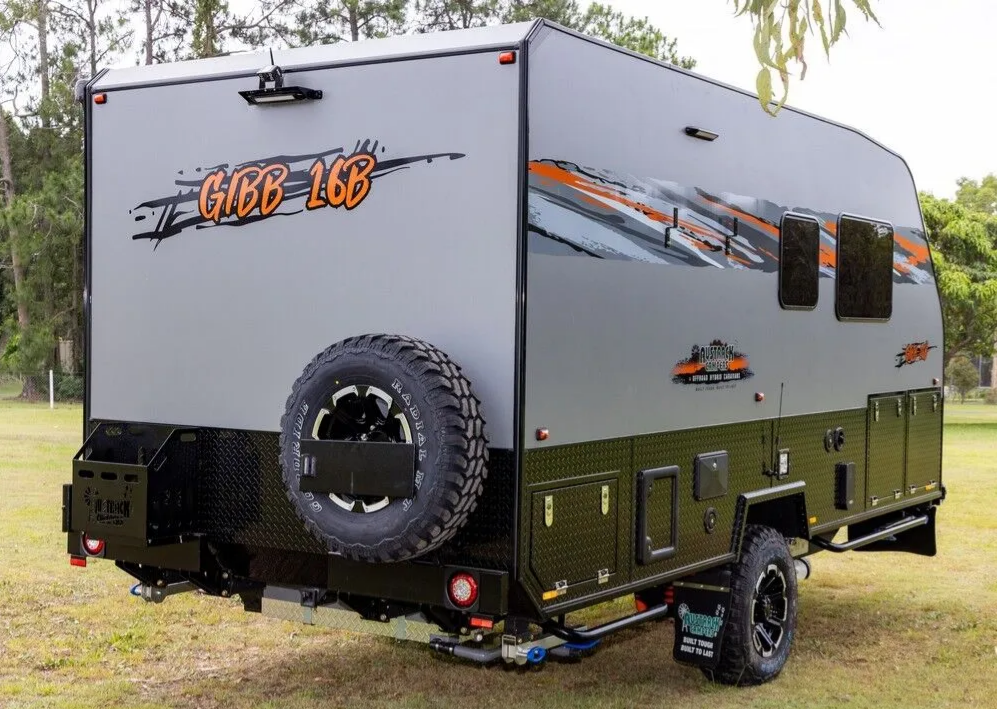
There is a good reason experienced caravanners treat their spare-parts kit almost as seriously as their water supply. A staggering 80 per cent of caravan owners have experienced a fault with their caravan, according to a survey by the Australian Competition and Consumer Commission. That number means a breakdown is far more a matter of when than if, so the question you need to answer before your next weekend trip is: what do you have on board to deal with it?
The good news is that most of the failures that strand weekend campers are caused by a handful of the same parts failing over and over again. They are small, cheap, and easy to carry. Small problems can quickly snowball into expensive repairs or even dangerous failures if left unchecked, but that snowball only forms when you have no spare to swap in. This guide runs through the parts that actually earn their place in your caravan's storage box, and what each one will save you when things go sideways at 4pm on a Friday afternoon.
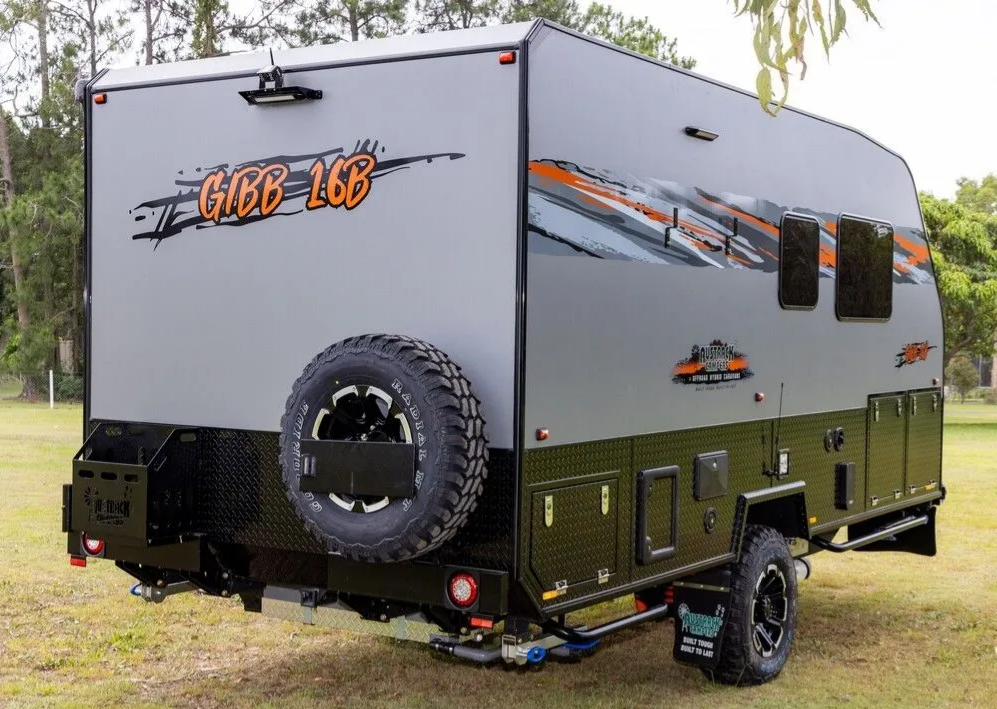
Tyres cause the most breakdowns: Tyre failures are among the most common causes of caravan breakdowns. Carry a correctly inflated spare, always. If your spare is flat, it is useless. Check it every month.
Bearings are a consumable, not a lifetime part: A caravan's tapered wheel bearings are not lifetime service items; they need to be checked for damage and either replaced or cleaned up and re-greased every 12 months or 10,000 km. Keep a bearing kit in the van.
Most electrical faults come down to a blown fuse: According to The Van Conversion's electrical guide, blade fuses are commonly used in 12V DC systems for low-power applications, such as lights or fans. A mixed pack of blade fuses costs a few dollars and takes up almost no space.
Gas system failures are fixable roadside: There is little to no maintenance you can do on a regulator; however, they do deteriorate over time. Deterioration is normally caused by poor gas quality from the bottles, water getting into the lines, or the pigtail lining deteriorating. When a regulator fails, the easiest solution is to replace the regulator. A spare pigtail hose is small and will get your stove working again in minutes.
A breakaway cable spare is not optional: A breakaway cable is an essential safety feature that is designed to apply the brakes of the caravan if it becomes detached from the towing vehicle. They are inexpensive and degrade with use, carry a replacement.
| Part | Best For | Effort to Replace | Cost of Spare | Priority |
|---|---|---|---|---|
| Spare tyre and inflator | All caravanners | Low | $80, $200 | Critical |
| Wheel bearing kit | Anyone doing 10,000 km+ per year | Medium | $20, $50 per axle | Critical |
| Blade fuse assortment | All caravanners | Very low | $5, $15 | Critical |
| 12V LED globes | All caravanners | Very low | $5, $25 per globe | High |
| Breakaway cable | All caravanners | Low | $15, $40 | High |
| Gas pigtail hose | Anyone with gas appliances | Low | $15, $35 | High |
| Water pump repair kit | Caravanners with hand pumps | Medium | $15, $30 | Medium |
| Jockey wheel handle | Frequent movers, solo travellers | Low | $25, $60 | Medium |
Start here if you are:
A first-time weekend camper: Grab the spare tyre, a fuse assortment, and a breakaway cable spare first. These three cover the most common failure points and you can fit them in a shoebox.
A frequent traveller clocking 10,000+ km a year: Add a wheel bearing kit and gas pigtail on top of the basics. At that mileage, bearings are a genuine consumable.
A solo traveller or couple heading off-grid: Prioritise the water pump repair kit and jockey wheel components. Remote areas make every small failure a bigger problem.
Tyre failures are among the most common causes of caravan breakdowns. Caravan tyres often sit unused for months at a time, which can lead to cracking, flat spots, and gradual deterioration. This is what makes caravan tyres different from the rubber on your tow vehicle; they spend most of their lives sitting still, which is almost as damaging as hard use.
As a general rule, for any touring caravan, no matter how much it has been out on the roads, look to change the tyres every five years. Sitting around can actually do more harm to a caravan tyre than using it. Therefore, if your van has been parked up for six months between trips, budget for a tyre inspection before you head off.
Only tyres of equal size and service description, Load Index and Speed Symbol, and identical wheels should be fitted across an axle and carried as a spare. A mismatched spare can create handling problems when towing, so make sure your spare is a genuine match for the fitted tyres, not a leftover from a different van.
Pro tip: Do not forget to check your spare tyre pressure every time you check the main tyres. TyreSafe's caravan tyre safety guide recommends treating the spare with the same care as the fitted tyres, a deflated spare on the side of the road is worse than no spare at all.
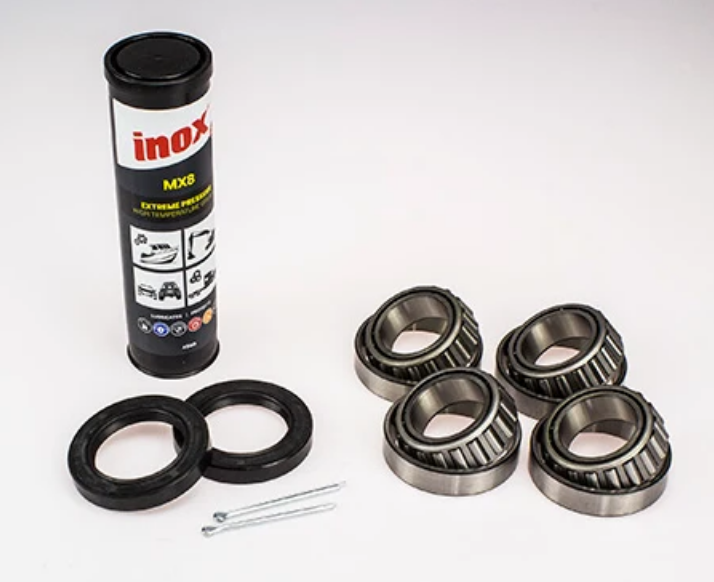
Wheel bearings are probably the most misunderstood consumable on any caravan. Most people treat them as a "set and forget" item, but RV Daily's bearing maintenance guide puts it bluntly: bearings allow the trailer's wheel to turn, but they are also an essential suspension component. If they fail or one comes apart, say goodbye to your wheel, and possibly your trip, worst case, your entire caravan.
Depending on how you use them and the terrain, bearings should be replaced every 10,000 to 15,000 km. It is far cheaper to schedule a caravan wheel bearing replacement before your next road trip than to deal with the aftermath of a seized wheel. For weekend campers averaging 200-300 km per trip, that is roughly 40-50 weekends of use before you hit the service threshold.
Many Australians keep bearing kits as spares because they are convenient and usually more economical than buying individual bearings. A kit for one wheel will typically include the inner and outer bearings, a new seal, and a split pin, everything you need to swap them roadside. McArthur Industries' caravan bearing guide recommends keeping at least one spare caravan wheel bearing kit and grease, especially if you plan to travel far from a service town.
Pro tip: Note the code printed on your existing bearings before you buy a kit. You will be able to identify which bearings your caravan uses by a code that is printed on the actual bearing. Match that code and you will always buy the right kit.
The lights in a touring caravan generally operate from the 12-volt battery system, as does the water pump, the cassette toilet, and any two-pin sockets you may have. That means a single blown fuse can take down several systems at once, leaving you without light, running water, or refrigeration on the same evening.
The solution is almost embarrassingly simple: carry a mixed pack of blade fuses. The Van Conversion's complete guide to campervan fuse boxes recommends that you install a 12V fuse box to centralise all DC circuits, with each circuit protected by a fuse matched to the current load, for example, 5A to 30A blade fuses. Carrying a pack that covers that range means you can replace most common blown fuses without knowing in advance which amperage will fail.
Most caravans and motorhomes use a 12-volt DC lighting system for interior lights. This means the lights run off the caravan's 12V battery instead of mains electricity. The advantage is that you can power your lights off-grid using your battery, which in turn can be charged by solar panels or your vehicle while driving.
Halogen globes are traditional incandescent bulbs, while LED bulbs are more energy-efficient and long-lasting. LED bulbs also offer improved brightness and durability. In my experience, keeping one spare festoon globe and one spare G4 LED covers 90 per cent of the interior fittings found in Australian vans. They weigh almost nothing and will outlast many weekends of use.
A functioning gas system is the backbone of weekend caravanning comfort. There is little to no maintenance runs on "low pressure", as all appliances are connected through a regulator. When that regulator or its connecting pigtail hose fails, your stove, hot water, and heating go with it.
There is little to no maintenance you can do on a regulator; however, they do deteriorate over time. Deterioration is normally caused by poor gas quality from the bottles, water getting into the lines, or the pigtail lining deteriorating. The pigtail, the hose between the gas bottle and the regulator, is the most vulnerable part and the easiest to replace yourself.
Replacement parts must match the existing approved installation, and any gas installation, alteration, leak, regulator replacement, or compliance work should be handled by a licensed gas fitter. For a weekend camper, the practical answer is to carry a matching spare pigtail hose, which you can swap like-for-like without regulatory concerns, and know the location of the nearest gas fitter for anything more involved.
Breakaway cables may seem inconsequential due to their size, but they are of vital importance, preventing the potentially severe consequences of a detachment while driving. While hitch failures are uncommon, using a breakaway cable gives you a buffer and a last line of protection if anything were to go wrong.
The cable itself degrades with use. The cable can become damaged or kinked over time, which might cause it to snap before it engages the caravan brakes in the event of an emergency. The breakaway cable must be checked regularly for damage, preferably before each trip. This should include a thorough examination of both cable and clip, to find signs of damage or wear and tear. If you spot any kinking or fraying, replace it immediately, and keep a spare in the box just in case.
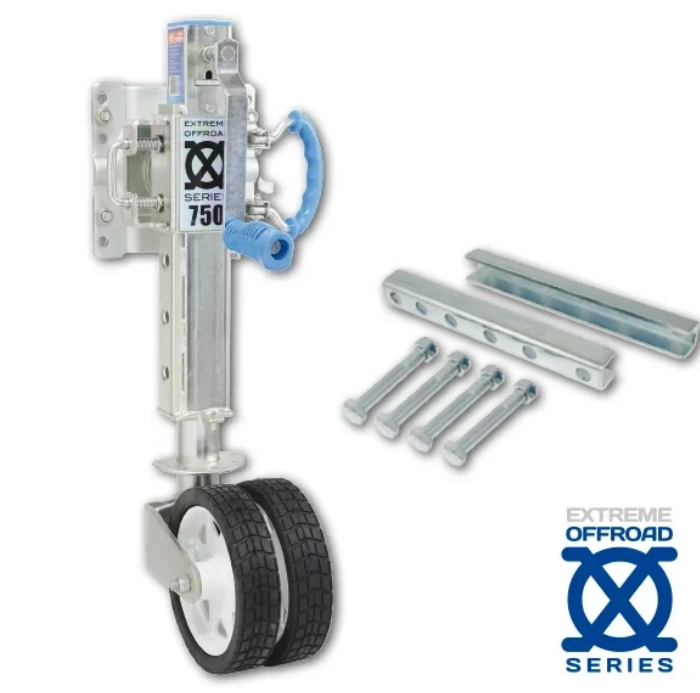
The jockey wheel is what you use to manoeuvre and level the van when it is unhitched. Trailer Camper Australia's hardware range stocks options like the ARK XO750 off-road jockey wheel specifically designed for demanding caravan and camper applications. A seized or broken jockey wheel handle might not endanger your drive, but it will ruin your arrival, particularly if you are solo. A spare handle or wheel clamp bolt is a cheap fix carried cheaply.
Water leaks can come from an overhead water tank, showers, taps, or seals and can cause further problems like floor damage and water ingress. At the mechanical level, the part most likely to let you down is the hand pump or the seals inside it.
TCA's range of water pumps and spare parts highlights the importance of water pump spare parts like filters, in-line check valves, and pressure regulators to ensure your water system stays efficient. Hand pump repair kits are also highly recommended to avoid breakdowns during remote trips.
For a weekend camper, the minimum sensible kit includes a hand pump repair kit with replacement seals, a spare inline filter, and a couple of John Guest push-fit fittings to deal with a split hose. I have found that carrying a repair kit is far more useful than a spare pump, kits are smaller, cheaper, and fit more failure scenarios. Trailer Camper Australia keeps a range of caravan parts and accessories available online, so you can order ahead of a trip rather than scrambling at a rural hardware shop on a Saturday morning.
A spare part is only as useful as the tools required to install it. A bearing kit sitting in the van is worthless if you do not have a wheel brace, a jack rated for the caravan's axle load, and a rubber mallet. Add a basic tool roll to your spares box before you go anywhere.
Not all caravan parts are interchangeable. Bearing kits, fuse ratings, and globe types all depend on your specific van's design. Keep a small list of the part numbers from your van's existing components, photo them on your phone, so you can match them exactly when ordering.
Do not forget the spare tyre. It is often overlooked but is equally important. A flat spare discovered on the side of the road is a genuinely grim situation. Check it every month alongside your main tyres, two minutes of effort, significant peace of mind.
Pro tip: Store your spare parts in clearly labelled, waterproof containers. Small electrical terminals, fuses and delicate gaskets should be kept in clearly labelled containers. Labelling each bin with its contents and target system saves precious time and frustration during an emergency repair.
For a standard weekend camper, you need enough parts to cover the four or five most statistically common failure points, tyres, fuses, globes, a gas pigtail, and a breakaway cable. Beyond those, add a wheel bearing kit if you clock up significant kilometres. The goal is targeted preparation, not a rolling hardware shop. If your box of spares is too heavy or complex to sort through quickly, it defeats the purpose.
The wheel bearings should be checked and re-greased every 12 months or 10,000 km, whichever occurs first. If you travel on rough or corrugated roads regularly, that interval should be halved. Industry guidance recommends inspecting wheel bearings every 5,000 km and performing a full service every 10,000 km or 12 months.
Swapping a pigtail hose like-for-like, using the exact same fitting type and pressure rating, is generally considered a straightforward task. However, any alteration beyond a direct replacement, or any work involving the regulator itself, should be handled by a licensed gas fitter. When in doubt, err on the side of professional help.
Your van's fuse board is usually labelled with which circuit each fuse protects. If not, check the owner's manual. A cheap digital multimeter, well worth adding to your tool kit, will confirm which fuse has blown in seconds. Replace only with a fuse of the same amperage; fitting a higher-rated fuse to solve a "keeps blowing" problem will cause much bigger issues.
Trailer Camper Australia (TCA) stocks a range of caravan hardware and parts including couplings, jockey wheels, towing accessories, and more. For electrical parts, water pump components, and gas fittings, online retailers can ship quickly to most of Australia. The key is ordering before a trip rather than in a panic after something goes wrong.
ACCC Caravan Fault Survey, Australian Competition and Consumer Commission. Industry fault rate data. https://rac.com.au/horizons/drive/caravan-problems
Common Caravan Issues and How to Spot Them Early, Tamworth & Northwest Caravan Hire Servicing & Repairs. Breakdown causes and prevention. Small problems can quickly
Essential Caravan Safety Checks, Warringah Brakes. Tyre failure statistics. https://warringahbrakes.com.au/essential-caravan-safety-checks/
Caravan Tyre Safety, TyreSafe. Official tyre care guidance. https://www.tyresafe.org/vehicle-owners/caravan-tyre-safety/
Caravan Tyre Safety Tips, Caravan Guard. Five-year tyre replacement guidance. As a general rule, for any touring
How to Service Your Bearings and Brakes Like a Pro, RV Daily. Bearing maintenance intervals. https://rvdaily.com.au/how-to-service-your-bearings-brakes-like-a-pro/
How to Maintain Caravan Wheel Bearings, RV Daily. Annual and kilometre-based maintenance. https://rvdaily.com.au/how-to-maintain-the-wheel-bearings-on-your-caravan-or-camper-trailer/
Caravan Wheel Bearing Kits and Replacement, McArthur Industries. Spare kit recommendations. https://www.mcaind.com.au/thinking-of-caravan-wheel-bearing-kits-wheel-bearing-replacement-for-your-caravan/
Caravan Bearing Guide, Couplemate. Australian bearing configurations. https://www.couplemate.com.au/introduction-trailers-caravans-and-towing/wheel-bearing-guide/
Trackside Wheel Bearing Change, MDC Camper Trailers. Service intervals. Industry guidance on wheel bearing maintenance
Must-Have Brake, Wheel-Bearing and Suspension Repairs, KJ Caravan Repairs. Breakdown statistics. https://kjcaravanrepairs.com.au/must-have-caravan-brake-wheel-bearing-and-suspension-repairs/
The Ultimate Guide to Campervan 12V Fuse Boxes, The Van Conversion. Fuse types and ratings. https://www.thevanconversion.com/post/this-is-everything-you-need-to-know-about-fuses-and-breakers-for-campervans
Caravan Gas Regulator Guide, Caravan Parts Australia. Regulator deterioration and replacement. There is little to no maintenance
A Guide to Caravan Breakaway Cables, Spinney. Breakaway cable function and safety. https://www.spinney.co.uk/blog/a-guide-to-caravan-breakaway-cables
A Comprehensive Guide to Breakaway Cables, Lifesure. Cable maintenance and inspection. https://www.lifesure.co.uk/articles/a-comprehensive-guide-to-breakaway-cables/amp
9 Essential Spare Parts for Remote Camper Van Travel, Habitatista. Parts storage and organisation. Small electrical terminals, fuses and delicate gaskets
Parts and Hardware, Trailer Camper Australia (TCA). Couplings, jockey wheels, and towing accessories. https://trailercamperaustralia.com.au/collections/hardware
These are placeholder FAQs -- replace via the "custom.article_faqs" metafield.