0 item(s)
View cart
You have no items in your shopping cart.
Planning a family caravan trip across Australia is one of the most rewarding things you can do together as a family. Australians took a record 17.3 million domestic caravan and camping trips in 2025, up 14 per cent year-on-year, spending $12.6 billion, according to new Tourism Research Australia data. That figure is a signal worth acting on: the open road has never been more accessible, more affordable, or better served by infrastructure than it is right now. Therefore, if your family has been toying with the idea, there is no better year to commit.
Adults aged 30 to 54 now account for roughly 46% of caravan and camping trips, overtaking the traditional over-55 market, and families with children have become the single largest travel group, responsible for around 31% of all caravan trips. The "grey nomad" era is giving way to a new generation of road trippers, and your family can be part of it.
The industry is booming, so book early: The number of caravan and camping trips increased by 14% during 2025, with Australians taking 17.3 million trips and spending $12.6 billion. Popular parks fill up fast during school holidays, so lock in your site the moment your dates are confirmed.
Families are the biggest segment: The family market remained the cornerstone of the caravan and camping sector, representing the largest segment of travellers, who continued to prioritise domestic travel in response to economic conditions. That means parks are increasingly geared towards your needs, use it to your advantage.
Keep daily driving under five hours: Experienced family caravanners try to make sure they aren't travelling more than five hours in the car a day, otherwise it just gets too long. Build shorter legs into your itinerary rather than racing between destinations.
Pre-trip safety checks save holidays: The 35-49 age bracket is the most likely to travel with their immediate family but is one of the least likely groups to do pre-trip safety checks, with oil level checks down 6% and tyre pressure checks dropping 3%, according to Budget Direct's road trip survey. Reverse this trend and run your checklist every single time.
| Strategy | Best For | Effort Level | Time to Results |
|---|---|---|---|
| Pre-book caravan park sites | All families, especially school holidays | Low | Immediate |
| Short driving days (under 5 hrs) | Families with kids under 10 | Low | Every trip |
| Pre-departure safety checklist | All caravanners | Medium | 30 minutes |
| Choosing the right van layout | First-time buyers | High | Planning phase |
| Off-grid capability upgrades | Families wanting remote freedom | High | Months ahead |
Start here if you're:
A first-timer: Focus on site pre-booking and a short, well-served route before you attempt remote travel.
A growing family: Prioritise bunk layouts and sleeping capacity, get the van right once and it pays off for years.
An experienced caravanner: Invest in off-grid upgrades such as lithium batteries and solar so you can escape the crowds.
The key to a comfortable caravan trip is selecting the right caravan, considering the size and layout that best suits your family's needs, as a caravan with a dedicated kids' sleeping area and enough space for play can make a big difference in how enjoyable your trip is. In my experience, the biggest regret first-time family buyers have is underestimating how quickly small spaces become suffocating on a rainy afternoon.
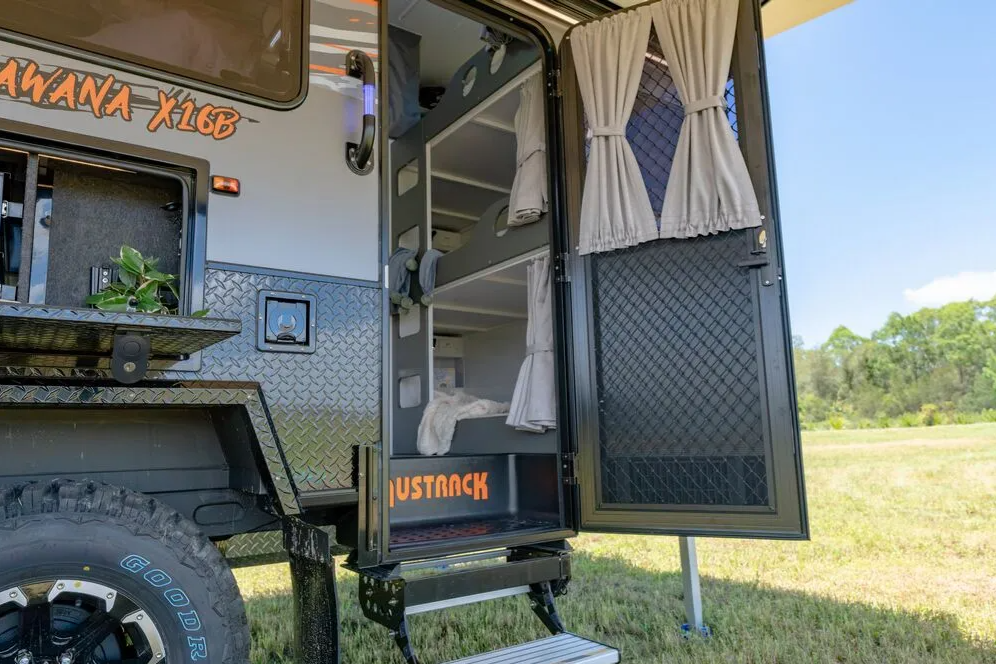
Family caravans offer ample space for families, medium-sized parties, and lone travellers, with a typical arrangement comprising a retractable double bed, bunk beds, and a spacious eating space. If your children are young and the family is still growing, look for a model that can sleep at least one more than your current headcount.
Canvas rear-fold camper trailers unfold to create a large tent living area with a queen or king bed at one end and a convertible lounge or bunk arrangement at the other, and a canvas annex extends the footprint further, giving kids their own sleeping zone separate from the adults. If you want a flexible, lightweight option, this style remains one of the most popular in the country. Trailer Camper Australia (TCA) stocks a curated range of camper trailers and caravans built for Australian conditions, including family-focused models from Austrack Campers that pack down small but open into a genuinely roomy retreat.
Pro Tip: Weight matters more than many people realise. Larger family camper trailers often come with bigger water tanks, batteries, kitchens and storage areas, but all of that adds kilos, so before buying, make sure your tow vehicle can comfortably handle the camper's loaded weight, not just the tare figure on the brochure.
Before setting off, research the weather at your destinations of choice, as the weather around Australia can change significantly depending on the season, and you'll want to plan your experiences and clothing accordingly. Northern Australia in the wet season is a beautiful disaster waiting to happen if you are unprepared. Coastal New South Wales and Victoria are superb spring and autumn destinations.
The top five destinations for domestic caravan and camping visitors to NSW were the North Coast (26%), South Coast (17%), The Murray (10%), Hunter region (10%), and Sydney (8%). These corridors offer reliable infrastructure, well-serviced caravan parks, and enough variety to suit children of any age.
If you plan to travel during school holidays, make sure to book everything well in advance, including caravan parks. I've found that the best family-friendly sites, especially those with waterparks, jumping pillows, and playgrounds, can be fully booked three to four months out during peak periods.
According to Tourism Australia's family road trip planning guide, setting off outside peak hours and coordinating longer drives with children's sleep times makes a material difference to the experience. If you have toddlers, a 6 am start that aligns with a morning nap is worth more than any playlist.
A caravan roadworthy checklist should include inspecting the tyres for wear and proper inflation, checking the brakes and bearings, examining the exterior lights and reflectors, and ensuring the towing equipment is in good working order. According to Allianz Australia's towing tips guide, you must also have an electric brake controller fitted in your towing vehicle, this is a legal requirement, and skipping it is a risk no family should take.
The NSW Transport caravan safety guidance recommends that you weigh your caravan and vehicle, identify your aggregate trailer mass (ATM) and gross trailer mass (GTM), and know your towing vehicle's maximum tow capacity before every trip. If the numbers don't add up, the load comes off, full stop.
Check tyre pressure on all wheels, including the spare
Confirm brake lights, indicators, and reverse lights are connected and working
Secure all cupboards, drawers, and the fridge with travel latches
Ensure the jockey wheel is raised and stored
Confirm the safety chain is attached correctly
Remove the 240V power lead before moving
Pro Tip: If you're new to towing, practice in a quiet area before hitting busy roads, and always drive at a safe speed, typically 10-20 km/h below the posted limit when towing. Quiet industrial estates on a Sunday morning are ideal practice grounds.
Plan interactive activities such as scavenger hunts, car games, and audiobooks that can make travel time exciting and fun for the kids. In my experience, a well-prepared activity bag for each child is as important as a full fuel tank; it keeps the peace on longer stretches and turns driving time into something the kids actually enjoy.
The Australian sun can be harsh so make sure to apply sunscreen regularly, wear hats, and protect eyes with sunglasses. This applies at caravan parks and rest stops, not just at the beach.
In the Caravan Industry Association of Australia's State of Industry 2025 Report, the family market remained the cornerstone of the caravan and camping industry, representing the largest segment of travellers, with families continuing to prioritise domestic travel in response to economic conditions. Caravanning is popular precisely because it competes favourably with flights and hotels for a family of four, but costs can still creep up if you're not deliberate.
One of the biggest barriers to taking road trips is the cost of fuel, with 36% of respondents in Budget Direct's survey answering that fuel prices are too high. Therefore, plan your route to minimise backtracking, fill up at regional towns before remote legs, and carry a fuel jerrycan if you're heading off the beaten track.
Family-friendly vans and sites get booked out fast over school holiday peaks, so lock yours in early. As a rule, aim for three to four months ahead for popular coastal and regional parks. Some premium parks open their school holiday booking windows six months in advance, check each park's own schedule and set a calendar reminder.
Look for caravans with family-friendly features such as an on-board bathroom, kitchen facilities, and enough storage for toys and games, and consider air conditioning and heating as crucial for maintaining a comfortable temperature regardless of the weather. Bunk beds for children and a separated parent sleeping area make a significant difference to everyone's quality of sleep.
Yes, with preparation. Allianz Australia's towing tips guide towing a caravan for the first time can be daunting, but along with the manufacturer's advice for your specific vehicle, key tips will help you get onto the open road with confidence, as keeping yourself and your passengers safe takes a bit of preparation before you hit the road. Take a towing course, practice reversing in a car park, and don't overload the van.
Each region showcases its unique landscapes and attractions, ensuring a diverse range of family holiday options across the country, and New South Wales has some of the most exciting family-friendly caravan parks in Australia. The NSW coast from Sydney to the Gold Coast, the Great Ocean Road in Victoria, and the Whitsundays in Queensland are all well-serviced routes with excellent park infrastructure, ideal for first-timers.
Caravan and Camping Data 2025, Tourism Research Australia. Official domestic caravan and camping trip statistics including record 17.3 million trips. https://www.tra.gov.au/en/domestic/caravan-and-camping-data
NSW Number One for Caravan and Camping Trips, NSW Government. State-level breakdown of caravan visitor data for 2025. https://www.nsw.gov.au/departments-and-agencies/dciths/ministerial-media-releases/nsw-number-one-for-caravan-and-camping-trips
Family Road Trips Survey and Statistics 2025, Budget Direct. Survey data on Australian road trip habits and barriers. https://www.budgetdirect.com.au/roadside-assistance-australia/guides/road-trip-survey-statistics.html
Who's Really Driving the Caravan Boom, Whats Up Down Under. Analysis of age and family demographics in Australian caravanning. https://whatsupdownunder.com.au/plan/holiday-park-travel/whos-driving-australias-caravan-boom/
Top Towing Tips for Caravans, Allianz Australia. Safety checklist and legal requirements for towing in Australia. Allianz Australia's towing tips guide
Caravans and Camper Trailers, Trailer Camper Australia. Family caravan and camper trailer range for Australian conditions. https://trailercamperaustralia.com.au/collections/caravans-camper-trailers
These are placeholder FAQs -- replace via the "custom.article_faqs" metafield.