0 item(s)
View cart
You have no items in your shopping cart.
Every year, thousands of Australian drivers tow their caravans down long, hot highways with no idea what is happening to their tyres. Many experts believe that 80% of tyre failures are caused by under-inflation, a problem that is almost entirely preventable. For anyone planning a big lap or a weekend getaway, that figure should prompt immediate action. Oricom tyre pressure monitors offer one of the most accessible ways to stay ahead of the problem, providing real-time alerts before a slow leak becomes a blowout on a remote stretch of road.
Under-inflation is the leading cause of tyre failure: Industry experts attribute 80% of tyre failures to under-inflation, so check and correct your pressure before every trip.
Oricom monitors up to 10 tyres simultaneously: As confirmed on the Oricom TPMS product range, their current TPMS10 series can track your tow vehicle, caravan, and spare tyres from a single solar-powered display, making it ideal for dual-axle setups. Poor pressure hurts your hip pocket too: Tyrepower's tyre fuel efficiency guide shows a 10% drop in tyre pressure increases fuel consumption by 2%.
Australia has no TPMS mandate: Australia is one of the only major developed automotive markets without a mandatory TPMS requirement, so fitting an aftermarket system is entirely your responsibility, and the right call.
| Setup | Best Oricom Model | Effort Level | Time to Install |
|---|---|---|---|
| Daily driver or single-axle trailer | TPMS10-4E (4 sensors) | Low | Under 10 minutes |
| Tow vehicle plus single-axle caravan | TPMS10-6E (6 sensors) | Low | 10-15 minutes |
| Tow vehicle plus dual-axle caravan + spares | TPMS10-8E or 10E (8-10 sensors) | Low-Medium | 15-20 minutes |
| Long-wheelbase rig or signal range issues | TPMS10-6ER or 8ER (with repeater) | Medium | 20-30 minutes |
Start here if you are:
A weekend camper or day-tripper: The TPMS10-4E at around $234 from TCA covers your tow vehicle and a single spare, the lowest-cost entry point.
A full-timer or long-distance tourer: Step up to the TPMS10-8E or 10E so all caravan axles and spares are covered; the 8-sensor unit is priced at $379.
Planning remote off-road travel: Choose a repeater bundle variant so caravan sensors stay reliably connected behind a long rig on corrugated tracks.
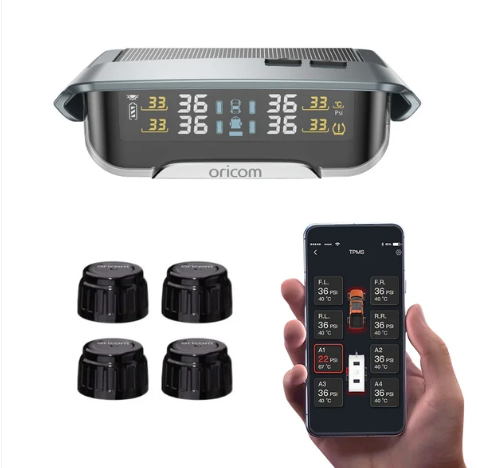
Oricom tyre pressure monitors work by creating a wi-fi network between a solar-powered receiver with a screen and screw-on sensors on the tyre. There are no messy cables to manage. The Oricom TPS10 is a stand-alone tyre pressure monitoring system that does not require any professional installation; the tyre pressure is monitored using external sensors that replace your tyre valve caps, so there is no need to interfere with any internal pressure monitoring system already on your vehicle.
In my experience, the fastest part of the setup is screwing the sensors onto the valve stems. Because there are no wires or replacement of internal pressure sensors needed, you can be up and running with the Oricom TPS10 in a matter of minutes. That is a genuine practical advantage for anyone who changes vehicles or caravans regularly.
Building on the popularity of the highly successful previous Tyre Pressure Monitoring System, Oricom has released the TPMS10 system, a next-generation TPMS that integrates seamless app functionality, making monitoring your tyres smarter, faster, and more efficient.
Once saved, the system constantly monitors each tyre and will send an alert straight to both the display and the app, so you are always in control, whether you are in the cab or checking your phone when the vehicle is off. This means you can check your caravan tyre pressures from the camp chair after setting up for the night, a genuinely useful feature on longer tours.
Off Road Mode on the Oricom TPMS10 is designed for when you drop your tyre pressures for rough tracks, sand, or corrugated roads. It is a simple way of changing parameters without having to manually adjust settings each time you air up and down. Without this mode, the alarm would fire constantly the moment you air down for a sandy beach crossing.
Pro Tip: If you are towing a longer caravan and find the rear sensors dropping out, add the optional RP10 repeater. Caravan World's 25,000km Western Australia review found the rear van sensors struggled without a booster, but worked reliably once the repeater was fitted underneath the van.
One of the strengths of the Oricom range is flexibility across complex towing setups. With the Oricom TPMS10 you can easily manage trailers and spare tyres through the display or the Oricom app. If you are towing, simply enable the trailer sensors to see their data alongside your vehicle tyres. When you unhitch, you can quickly disable or hide that trailer profile so it does not clutter your screen.
For drivers towing trailers campers, or boats, pressure changes can occur quickly due to uneven loads or extended travel. Oricom's pressure monitors allow you to track up to 10 tyres at once, making them ideal for dual-axle caravans or vehicles hauling extra gear.
I have found that monitoring the spare is underappreciated. A tyre sitting unused can lose pressure gradually, and the last thing you want on the Gibb River Road is to pull out a flat spare after a puncture.
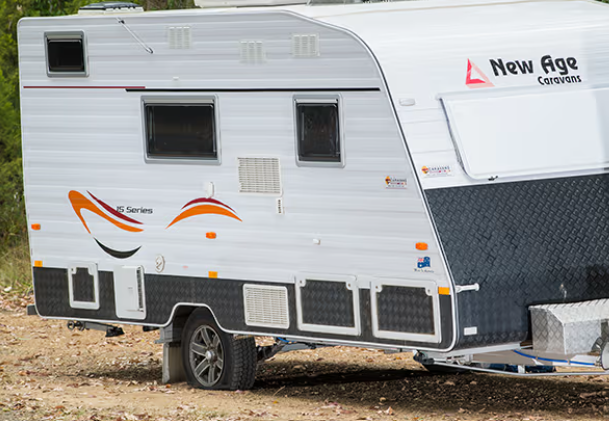
Caravans face a 'perfect storm' of conditions that lead to tyre failure: most modern vans run close to their Maximum Authorised Mass, putting immense constant pressure on the sidewalls. Heavy loads combined with long highway hauls at 100 km/h generate friction, and in the Australian summer this internal heat can reach critical failure levels in minutes. Because the trailer is a separate unit, a slow leak caused by a nail or a faulty valve is almost impossible to detect from the cab without electronics.
A study cited by iCheckTPMS found that vehicles equipped with a direct TPMS were 55.6% less likely to have severely under-inflated tyres compared to vehicles without one. If you are not running a TPMS, the odds are not in your favour, fit one before your next tour.
A drop in tyre pressure can have a noticeable impact on fuel consumption. A 10% drop in tyre pressure can increase fuel use by around 2%, and over time this adds up to higher fuel costs and more frequent trips to the petrol station. On a 5,000 km touring holiday, that 2% difference is money you could spend on campsite fees or a good meal. Correct your pressure and keep it there.
Pro Tip: Tyre pressure changes with temperature. As a guide, for every 5°C drop in temperature there is a 2% loss in tyre pressure, so always check pressure in the morning before the day heats up, not after a long highway run when the tyres are hot.
If you are fitting a TPMS to a caravan, horse float, boat trailer, or any towed vehicle, external sensors are almost always the better choice. They are easier to install, simpler to maintain, and you can move them between vehicles in minutes.
The Oricom range offers both options, but for most caravanners the external sensor is the clear practical winner. If an internal sensor fails while you are halfway along the Oodnadatta Track, you are stuck with a warning light until you reach a major town with a tyre machine. If an external sensor has an issue, you can simply unscrew it, check the battery, or swap it out instantly.
Pros:
No professional installation required
Sensors move easily between vehicles and trailers
Batteries replaceable roadside without a tyre machine
Compatible with up to 10 tyres on a single display
Cons:
Slightly exposed to physical damage compared with internal sensors
Can read 1-2 PSI differently from internal sensors due to ambient temperature exposure
Require anti-theft locking nuts to deter tampering in busy campsites
Long caravans may need an optional signal repeater for reliable coverage
Pro Tip: At Trailer Camper Australia, it is well worth pairing your Oricom TPMS purchase with a check of your caravan's tyre load ratings and age. Tyres over five years old should be inspected by a professional regardless of how good the tread looks, as internal degradation is invisible to the eye.
The TPS10 can report on up to 10 tyres by scrolling through the display four at a time, so four are for the tow vehicle, four are for the caravan and there are two for any spares. This makes it well suited to most Australian towing setups, including dual-axle vans with individual spare tyres monitored.
In some cases, when using with a caravan, a repeater may be required to ensure full range between sensor and control unit. Longer vans or setups where the display sits far forward in the cab are most likely to need one. The good news is that Oricom sells the RP10 repeater as an optional add-on, and it is also available in bundled "ER" value packs.
No, this is exactly what Off Road Mode is for. The system is designed to alert you if your tyre pressure goes below a set minimum, but when you air down for off-road driving those pressures are much lower than usual. Switching to Off Road Mode saves separate preset thresholds for your aired-down pressures so the alarm stays quiet on corrugated tracks.
It is a worthwhile investment and will pay for itself the first time it saves buying a new tyre. Even infrequent travellers can pick up a screw or suffer a slow valve leak without knowing it. One prevented blowout or one avoided tyre replacement pays back the cost of the unit many times over, and the peace of mind on remote roads is a bonus that does not appear on any price tag.
These are placeholder FAQs -- replace via the "custom.article_faqs" metafield.