0 item(s)
View cart
You have no items in your shopping cart.
Whether you're chasing corrugated tracks through the Kimberley or setting up a riverside camp in the Snowy Mountains, one question always comes up: what do you do when nature calls and there's no dunny in sight? The best portable camping toilet turns what could be an awkward situation into a non-issue, and in many parts of Australia, it's no longer optional gear.
Rangers warn that bush toileting in national parks is rising, with fines of up to $500 for improper waste disposal. That stat alone should make every Aussie camper think twice before leaving the portable loo at home. A lot of places in Australia will not let you in unless you have a portable toilet, this mainly applies to private properties, but it is becoming more and more common. The good news is that the market for portable camping toilets has never been better, with options to suit every style, budget, and campsite.
In my experience, the right portable loo makes a weekend trip genuinely comfortable rather than something to endure. This guide covers the five best portable camping toilets for Aussie adventurers in 2026, plus a quick run-down of portable toilet alternatives for camping so you can make the smartest choice for your setup.
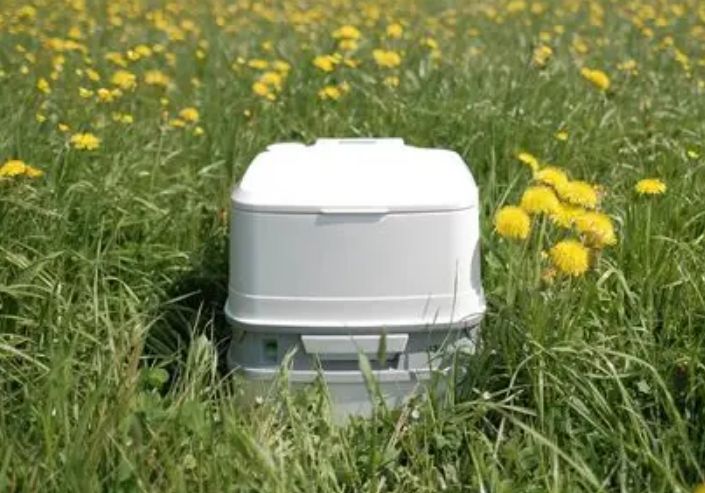
Fines are real: It is now an offence to camp in certain areas without a portable toilet, with an on-the-spot penalty of $464 applying for offenders. Budget for a quality unit before your next trip; it pays for itself on day one.
Chemical toilets are the most widely accepted: Only fully self-contained chemical portable toilets are allowed in many Queensland national parks. They must have a sealed waste-holding tank and be suitable for transport and for emptying at designated disposal points.
Match capacity to trip length: The number of uses depends on the size and type of portable camping toilet, as well as how many people are using it. Many camping toilets can last around 2 to 5 days for one to two users, while larger capacity options may last longer. If you're heading out for a week with the family, go large.
Alternatives exist for eco-conscious campers: Composting and separating-style toilets are growing in popularity and are generally accepted across Australian campsites, though check local rules before you go.
Portable toilets are widely accepted: Portable camping toilets are widely accepted across Australian campsites, including many national parks and free camping areas. In some locations, using a camp toilet is encouraged to help manage waste and reduce environmental impact.
| Toilet Type | Best For | Effort Level | Time to Results |
|---|---|---|---|
| Chemical flush (large) | Families, extended trips, camper trailers | Low | Immediate |
| Chemical flush (compact) | Couples, weekend trips, tight spaces | Low | Immediate |
| Separating / composting | Eco-conscious campers, off-grid devotees | Medium | Immediate |
| Dry-flush electric | No-fuss convenience, minimal smell sensitivity | Low | Immediate |
| Bucket / folding | Day trips, emergency backup | Very Low | Immediate |
Start here based on your situation:
Camper trailer or caravan owners: Go straight to the Thetford Porta Potti 365 or the Thetford Porta Potti 565E , the capacity and comfort level matches your setup perfectly.
Solo or couple adventurers: The Dometic 972 or Joolca GottaGo keeps things compact without sacrificing hygiene.
Eco-focused off-gridders: The OGO Nomad Composting Toilet eliminates chemicals and dump point queues entirely.
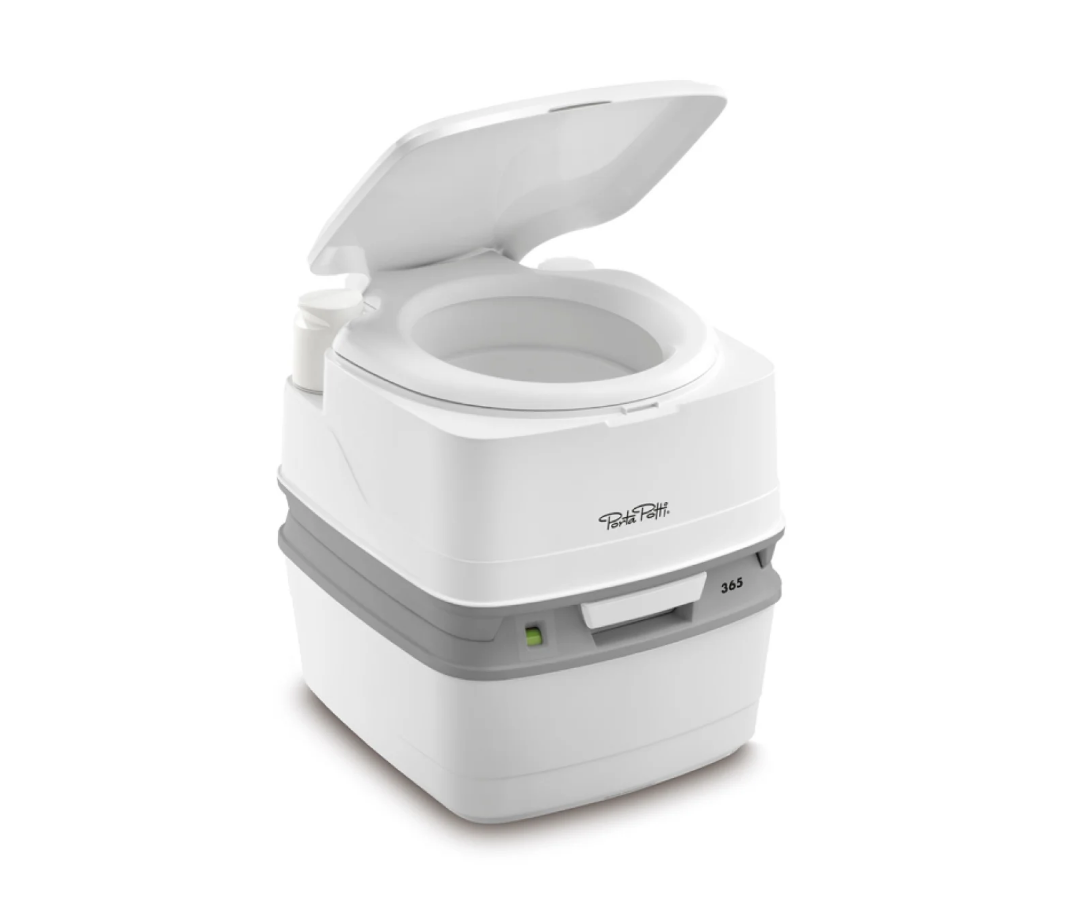
The Qube 365 is the latest release from Porta Potti and quickly became the new standard, with Thetford becoming leaders in the portable camping toilet market. In my experience, the 365 is the model I'd confidently hand to anyone new to camping toilets; it just works, every time.
You can find the Thetford Porta Potti 365 stocked at Trailer Camper Australia, making it a convenient pick-up alongside the rest of your camp gear.
The Thetford Porta Potti Qube 365 offers enhanced convenience and comfort with its larger size, providing greater waste capacity and a height comparable to domestic toilets. Crafted from lightweight yet durable plastic, it boasts a 21L waste holding tank and a 15L flush-water capacity, reducing the frequency of emptying.
Thetford is the best-selling brand in portable camping toilets and toilet care products, and they're so confident you'll love the product that they offer a three-year warranty. That's a genuine differentiator, three years of coverage for a product you'll use on dirt tracks and in all weather.
The 365 is also fully self-contained with a sealed waste tank, meaning it meets the requirements of Queensland national park regulations for portable toilets in restricted camping zones.
Pros:
Domestic-height seating (414mm) for real comfort
21L waste tank and 15L flush tank, excellent capacity
Hermetically sealed to keep odours completely contained
Three-year manufacturer's warranty
Widely available and well-supported in Australia
Cons:
Slightly heavier than compact alternatives
Requires toilet chemical additives (ongoing running cost)
Piston pump can feel basic compared to electric-flush models
If storage space is tight, think a small campervan, a rooftop tent setup, or a motorcycle sidecar adventure, the Dometic 972 earns its place as the best compact portable camping toilet.
Push-button technology ensures less pumping, less splashing, and a powerful, hygienic flush. The 9.8L tank, with a tank level indicator, contains enough water for 27 flushes.
With a width of 333mm, a depth of 387mm, and a height of 317mm, the toilet is compact and can easily fit into small spaces. Despite its compact size, it weighs just 4,680 grams, making it lightweight and portable. That's roughly the same weight as a full water bottle, genuinely packable.
The Dometic 972's weak point is the smaller waste tank. The Dometic 972 Portable Toilet has an 8.7L holding tank, which is sufficient for 27 flushes. For a solo traveller on a weekend trip that's fine, but a family of four would be emptying it daily, which gets old fast. Use this one as specified: couples, short trips, or anywhere space is the limiting factor.
Pros:
Ultra-compact footprint suits small vehicles and tents
Push-button flush, no vigorous pumping required
4-stage tank level indicator prevents overfilling
Robust ABS construction handles harsh conditions
Adult-sized seat despite the small overall form factor
Cons:
9.8L waste tank is too small for families or long trips
Smaller tank means more frequent trips to the dump point
Discontinued in some markets, check availability before purchasing
Best Portable Toilet Alternative, Best Separating Toilet for Australian Camping
The Joolca GottaGo takes a different approach entirely, and for a growing number of Aussie campers, it's a revelation. It separates solids from liquids keeps odour down, and empties without drama, whether you're running it as a composting, chemical, or bag toilet. That three-mode versatility is genuinely rare in a portable unit.
The chemical cassette holds approximately 11L with around 19 uses, the eco cassette holds 9.4L with around 23 uses, and the urine container holds 4.6L good for 12 to 15 uses. The urine separation is the clever bit, keeping liquids and solids apart dramatically reduces odour compared with a standard chemical toilet.
I've found that the GottaGo's flexibility is its biggest selling point for Australian conditions. Swap the eco cassette in for leave-no-trace camping in national parks, then switch to the chemical cassette when you're near a dump point. The GottaGo is completely non-electric, which makes it ultra-portable. No batteries, no power lead, no drama.
The honest downside? Once waste enters the solids container, there's no airflow, no agitation, and no drying, meaning no composting process actually begins. It's a separating dry toilet rather than a true composting unit, so manage your expectations around the eco claims.
Pro Tip: Running the GottaGo in eco mode? Add a thin layer of coconut coir or peat moss after every solid use. This dramatically reduces odour and extends the time before you need to change the bag.
Pros:
Three-mode operation (composting, chemical, or bag)
Urine separation dramatically cuts odour
No electricity required, genuinely portable
Full-size comfortable seat and lid
Cons:
Not a true composting toilet despite the eco cassette option
Without airflow, odour management relies on correct technique
Urine container (4.6L) needs emptying every 12-15 uses, daily for two people
For campers who spend weeks at a time away from dump points, the OGO Nomad is the standout portable toilet alternative for Australian camping.
The OGO Nomad is designed for camper vans, camper trailers, and tent camping or anywhere you need a mobile toilet solution. Instead of a solid bin, solids go into a disposable bag. Instead of a motor-driven agitator, solids are composted using the layering method.
Measuring only 330mm x 390mm x 315mm when closed, the OGO Nomad fits into the smallest of spaces. Weighing just 6.8kg, it is easy to carry and transport.
The disposable bag in the solids compartment lasts approximately 8 to 10 uses before it needs to be replaced. The urine bottle capacity varies by user but typically needs emptying every 1 to 2 days for regular use. Adding a layer of coco coir after every solids use extends time between bag changes and keeps odour in check.
The OGO's real advantage over chemical toilets is freedom from dump points. You bag the solid waste and dispose of it in any general rubbish bin. The liquid bottle empties into any toilet or 100 metres from a waterway. Composting toilets are becoming popular for off-grid travel and living. And given Australia's vast distances between dump points, that's a genuinely practical benefit.
Pro Tip: Before your first trip, read up on the park's waste rules. In some places, especially high-traffic or environmentally sensitive camping areas, the rules require a portable, self-contained toilet that is approved for use in Australia and can be emptied into a dump point. The OGO Nomad qualifies when used with its sealed bag system.
Pros:
No chemicals required, waterless and power-free operation
Patented urine diversion system eliminates the main source of odour
Solids dispose of in any general bin, no dump point needed
Backed by a three-year warranty
Cons:
Higher upfront cost compared with chemical toilets
Requires coco coir medium (ongoing consumable)
Learning curve for correct urine/solid separation technique
Bulkier footprint than compact chemical alternatives
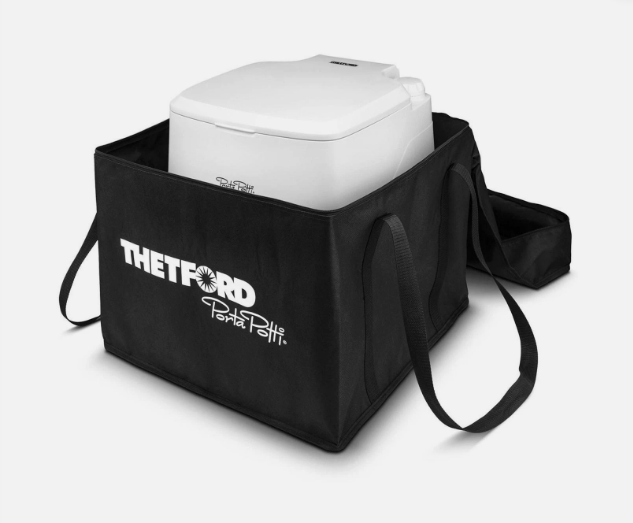
The single biggest mistake campers make is buying a toilet with too-small a waste tank. For those seeking maximum capacity, the Thetford Porta Potti Qube 365 offers near-domestic toilet height with a generous 21-litre waste holding tank. As a rule of thumb: a 20L tank suits a couple for a week, or a family of four for a long weekend. Anything under 10L is a day-trip or solo solution only.
Several popular camping spots in Queensland introduced strict new rules prohibiting bush toileting after a rise in people leaving unwanted surprises across nature reserves. The situation is similar across other states. Rangers warn that bush toileting enforcement after authorities reported an increase in improper human waste disposal in bushland areas.
The practical takeaway: always carry a self-contained, sealed portable toilet when venturing into national parks or remote areas. Check the specific park's rules on the Parks Australia website or your state's parks authority before you go.
Chemical toilets are the most popular option for remote camping. They're self-contained units with a flush tank and a sealed waste tank below. You'll need to add toilet chemicals to help break down waste and control odours. Chemical toilets feel the most like a real loo, ideal if you're after both comfort and hygiene.
Composting and separating toilets (like the OGO Nomad and Joolca GottaGo) suit campers who prefer to avoid chemicals and don't want to rely on finding dump points. Composting toilets remain one of the most environmentally responsible waste systems for travellers in Australia. The understanding of toilet styles is maturing, and National Parks are acknowledging that composting toilets are a useful method to protect the environment.
If you're using a chemical toilet, always add the correct treatment fluid before your first use of the trip. Dose 60ml per 20L waste-holding tank capacity and add 2 to 3L of water, this lasts up to 5 days. The fluid liquefies waste for easier tank emptying and reduces gas build-up for outstanding odour control. Skipping this step turns a pleasant experience into a genuinely unpleasant one.
Some Queensland camping areas require portable toilets to have a sealed waste-holding tank and be suitable for transport and for emptying at designated disposal points. Simple or makeshift options like bag toilets or open bucket-style toilets are not permitted. Check compliance before your trip, not after the ranger shows up.
National parks are not approved dump points for chemical toilets, find a designated dump point elsewhere. Most Australian caravan parks and highway rest stops have dump points. Apps like WikiCamps Australia and Hema Explorer show dump point locations throughout the country.
It depends on where you're going. A lot of places in Australia will not let you in unless you have a portable toilet. In many Queensland national parks and sensitive coastal areas, a portable toilet is now mandatory. In other areas, burying waste properly is still acceptable. Always check the rules for your specific destination before you pack.
The answer depends on the size and type of portable camping toilet, as well as how many people are using it. Many camping toilets can last around 2 to 5 days for one to two users, while larger capacity options may last longer. A 20L tank is generally good for a couple over a long weekend, while a family of four would need to empty it every 1 to 2 days.
Generally yes, but with caveats. There are some toilet and waste wording changes in certain WA national parks and sensitive Queensland camping areas that support the use of sealed composting toilets, not a ban. Composting toilets are still absolutely a responsible and accepted option. The key rule across most parks is that waste must be fully contained and emptied at an approved facility.
The best portable toilet alternatives for camping are separating toilets (like the Joolca GottaGo) and composting toilets (like the OGO Nomad). These options separate solids from liquids, keep odour down, and empty without drama, whether you're running them in composting, chemical, or bag mode. They suit campers who want to reduce chemical use and avoid reliance on dump points.
Most caravan parks, roadhouse rest stops, and highway service areas have designated dump points. You are NOT permitted to empty chemical toilet waste into general campsite toilets, pit latrines, or natural water sources. Visitors are asked to avoid emptying portable toilet waste into any toilets or general waste facilities in recreation areas. Use the free RV dump finder resources to locate dump points on your route before you depart.
Picking the best portable camping toilet comes down to three things: your trip length, your storage space, and where you're heading in Australia. For most camper trailer and caravan owners, the Thetford Porta Potti 365 is the gold-standard chemical toilet for comfort and regulatory compliance. Compact travellers should look at the Dometic 972, flexible campers at the Joolca GottaGo, and long-range off-gridders at the OGO Nomad.
Whatever you choose, choose something, the days of quietly hoping for a bush behind the right tree are increasingly behind us, and for good reason.
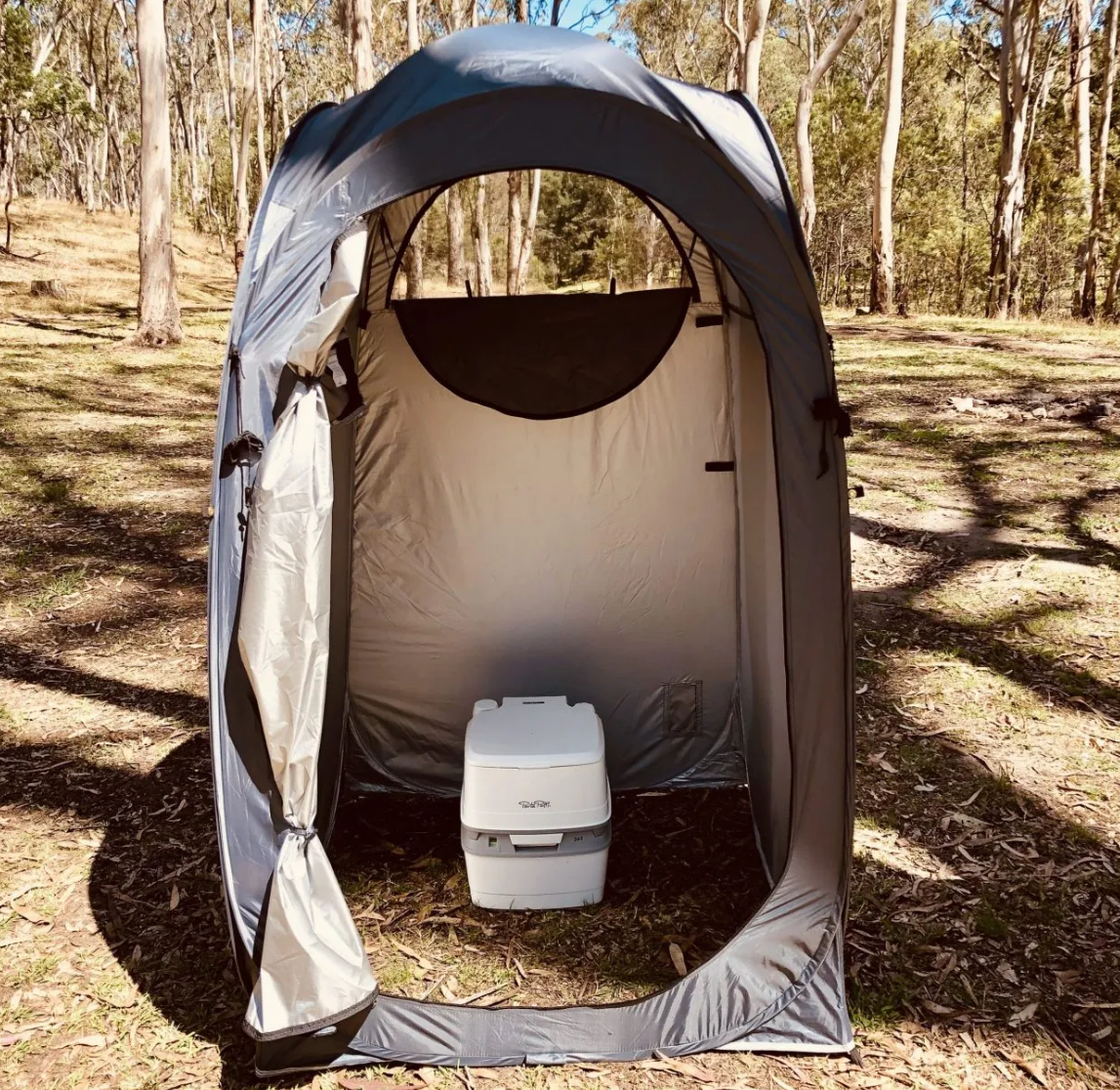
Portable Toilet Regulations QLD, Yahoo News Australia. Bush toileting fines and portable toilet rules for Queensland national parks. https://au.news.yahoo.com/aussies-warned-of-500-fines-for-common-camping-act-204518502.html
National Park Waste Disposal Fines, YourLifeChoices. Fines of up to $500 for improper waste disposal in Australian national parks. Rangers warn that bush toileting
Thetford Porta Potti 365 Product Page, Trailer Camper Australia. Full specs and purchase link for the Porta Potti 365. https://trailercamperaustralia.com.au/collections/portable-toilets/products/thetford-porta-potti-365-portable-toilet
TCA 20L Portable Toilet, Trailer Camper Australia. Product page for the 20L portable camping toilet with carry bag and sprayer. TCA 20L Portable Camping Toilet
Portable Camping Toilet Range, Trailer Camper Australia. Full toilet and accessories range. https://trailercamperaustralia.com.au/collections/portable-toilets
Thetford Porta Potti 365 Official Specs, Thetford Australia. Official product specifications and chemical treatment guide. Thetford Porta Potti 365 product specifications
Dometic 972 Portable Toilet, Dometic. Official product page for the compact 972 series. https://www.dometic.com/en/product/dometic-972-9108557679
Dometic 972 Specifications, Manuals Library. Full dimensions, weight, and tank capacity specs. https://www.manua.ls/dometic/972/manual
Joolca GottaGo Specifications, Joolca Support. Full cassette capacities and use counts. The chemical cassette holds
Joolca GottaGo Australia, Joolca Australia. Product page and three-mode overview. https://www.joolca.com.au/products/gottago
OGO Nomad Toilet, OGO Composting Toilets Australia. Product page, specifications, and FAQ. https://ogotoilet.com.au/product/ogo-nomad-toilet/
Composting Toilets and Australian Regulations, Compo Closet Australia. Clarification on composting toilet rules in WA and Queensland national parks. https://compocloset.com.au/blogs/news/i-have-heard-on-facebook-that-composting-toilets-are-being-banned
The Ultimate Guide to Camping Toilets in Australia, 4WDing Australia. Overview of types, uses, and regulations. https://www.4wdingaustralia.com/camping/the-ultimate-guide-to-camping-toilets/
Grey Nomads: War on Waste, The Grey Nomads. Overview of mandatory portable toilet rules and on-the-spot fines. https://www.thegreynomads.com.au/loo-10/
Leave No Trace Australia, Queensland and Beyond. Practical guide to responsible waste management while camping. https://queenslandandbeyond.com/responsible-camping-leave-no-trace/
These are placeholder FAQs -- replace via the "custom.article_faqs" metafield.