0 item(s)
View cart
You have no items in your shopping cart.
Every caravan owner knows the sound. You pull away from a campsite, cruise along a gravel track, and there it is again, a persistent metallic clanking from the back of your vehicle. For most people, a rattling hitch receiver is written off as an annoyance. A rattling tow hitch is a safety concern, not just a noise issue; it hints at a loose connection, and depending upon where this is, you could find excessive trailer sway when next on the move.
Trailer hitch noise can result from metal-on-metal friction, loose connections, or rust, with friction between moving parts or loose connections producing various noises, ranging from minor squeaks to more pronounced rattles or bangs. An anti-rattle hitch device addresses this at the source, and for Australian campers and caravanners, understanding your options could make your next adventure significantly safer and quieter.
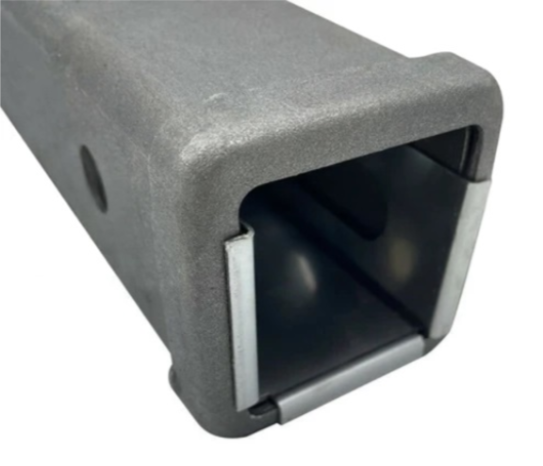
Image: Anti-rattle Shim Kit
Rattle signals looseness, not just noise: A noisy, vibrating, jarring hitch setup can be obnoxious and even dangerous if left unchecked, stabilising your vehicle-trailer connection adds safety, comfort, and peace of mind to your adventures. If you hear it, act on it before your next tow.
The root cause is a manufacturing gap: Manufacturers leave space between the ball mount and receiver for easy insertion, which causes the ball mount to move inside the receiver, and those small gaps between the hitch shank and receiver tube allow metal-on-metal movement, causing rattling. An anti-rattle device closes that gap permanently.
Clamps suit solid and hollow shanks; pins suit hollow only: Anti-rattle pins only work in hollow ball mounts and hitch devices; they are not compatible with solid shank accessories. Choose your device type based on your specific ball mount.
Ignoring rattle damages your equipment: A loose tow hitch causes physical damage to the tow bar over time, the hitch was not only loose in the up-and-down orientation, but in the left-to-right and in-out directions as well, and the hole in the tow bar where the hitch pin goes through can become mushroomed and oval-shaped. Replacing a hitch bracket costs far more than a $30 anti-rattle device.

Start here if you're:
A weekend camper with a bike rack or cargo carrier: An anti-rattle bracket or clamp is your fastest, most affordable fix; it works on almost any receiver and does not require tools.
A regular caravanner towing a van over corrugated roads: A U-clamp style hitch tightener delivers more clamping force across all axes, which is valuable on rough terrain where vibration is constant.
Towing with a hollow-shank ball mount: An anti-rattle hitch bolt (pin style) replaces your standard hitch pin and closes the gap from inside the shank, making it the simplest possible upgrade.
If you've picked up a ball mount slid it into your receiver tube, and thought 'is that supposed to wobble like that?', you're not alone. A very common phenomenon is that your ball mount does not fit snugly, and there can be play in that connection. This is an intentional design choice, made to allow easy insertion and removal of different accessories, but it creates a mechanical weakness the moment you start driving.
A loud banging noise coming from the hitch area when accelerating is most likely your drawbar moving around in the receiver, a fairly common occurrence, as the drawbar is meant to fit fairly snug into the receiver, but differences in manufacturing tolerances create play.
Left unaddressed, the result is a rattling, whining or clunking noise that occurs when you are driving, adding additional stress on your hitch pin, which receives the brunt of all that slamming and grinding. That stress is cumulative. Receiver hitches are exposed to water, road salt, dirt, vibration, and repeated load changes during acceleration, braking, and turns, over time, that combination can create noise, corrosion, looseness, and fitment complaints.
Pro tip: Before buying any anti-rattle device, insert your ball mount and push it firmly in every direction by hand. If it shifts inside the receiver tube, the problem is in the receiver-to-shank fit and a clamp or bracket is your solution. If the entire hitch moves relative to the vehicle frame, check your mounting bolts first, per this towing safety checklist.
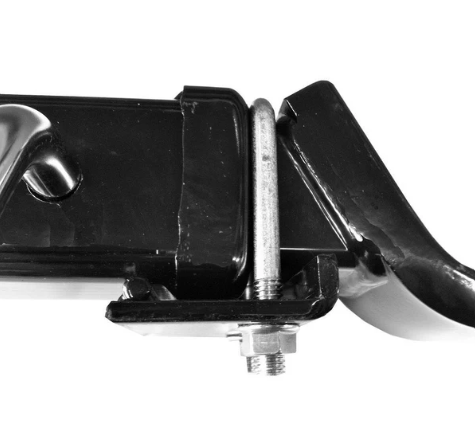
Anti-rattle hitch clamp kits are designed to fit standard receiver hitches and can be used with both hollow and solid shanks; you simply slip it over the shank of the ball mount, insert the hitch into the receiver, secure the U-bolt behind the collar, tighten down, and clamp for a quiet towing experience.
In extreme towing situations, the clamp style is better at stabilising the ball mount shank in the receiver and has a longer lifespan than pin-style devices. This makes it the preferred choice for serious caravanners who tow regularly on rough Australian roads.
The Mister Hitches Anti-Rattle Hitch Bracket (MHARHB) available through Trailer Camper Australia is one well-regarded Australian option. It dramatically reduces any movement or vibration of your ball mount in your hitch by torqueing down the hitch or accessory firmly onto your receiver. It stops that annoying hitch rattle when towing or using a bike carrier or other accessories, fits most hollow shank and solid shank 2" ball mounts and receivers, and is powder-coated with a zinc-plated U-clamp for durability.
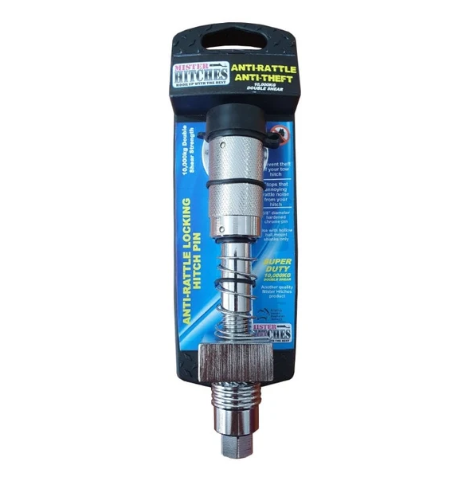
A trailer hitch anti-rattle pin has a threaded shank to tighten down on the ball mount and keep it from vibrating in the receiver. Many models feature locks and keys, providing extra security against theft, and they are generally compact and easy to install, with no external components like U-clamps.
The Mister Hitches Anti-Rattle Hitch Bolt, also stocked by Trailer Camper Australia, is zinc-plated for corrosion protection and includes a sleeve and R-clip, a practical choice for Australian conditions where coastal humidity and dust are constant factors.
A hitch tightener securely tightens your hitch, preventing any rattling or clanking sounds during towing, and this style fits all Class I, II, III and IV hitch mounts with ease. A true clamp-style tightener applies direct pressure on the hitch shank, locking it against the receiver wall, addressing vertical, lateral, and in-out movement simultaneously.
Image: Anti-rattle Hitch Bracket
Beyond the noise, there is a compliance angle that Australian towers cannot afford to overlook. Always verify your vehicle's maximum towing capacity and your trailer's Aggregate Trailer Mass (ATM) before selecting a towbar receiver hitch, and never exceed the lowest-rated component within your entire towing configuration.
All safety-critical towing components, towbar assemblies, and coupling hardware used on public roads must comply strictly with federal transport regulations, including towbar and safety chain connection criteria via the Federal Vehicle Standards Bulletin 1 (VSB1). A loose, rattling receiver connection is not just uncomfortable; it potentially puts you in breach of roadworthiness standards.
A tow hitch clamp stabilises the connection between the towbar and the hitch receiver, thus eliminating annoying rattles and possible swaying commonly associated with hitch-style towing systems. Swaying under load is a known cause of caravan accidents on Australian highways, which makes keeping the receiver connection firm a genuine safety measure rather than a luxury upgrade.
Pro tip: Per the Good Sam trailer maintenance guide, inspect your hitch pin, ball mount, and any anti-rattle components before every trip. Trailer maintenance is essential for safety, performance, and avoiding roadside headaches, unlike your tow vehicle, trailers do not have warning lights or dashboards to alert you when something is wrong, which makes regular upkeep even more important.
If sizes are different or you have any trailer hitch slop, loosening and rattling of the equipment will occur and can lead to unsafe towing situations. Check your receiver opening (40mm or 50mm square is common in Australia) before purchasing any anti-rattle device. The 2" stabiliser is designed for 1.25 and 2 inch hitches, while the 2.5" heavy duty steel stabiliser is for 2.5" hitches, using the wrong size defeats the purpose entirely.
Wrapping electrical tape around a ball mount shank is a temporary workaround that degrades rapidly under heat, UV, and repeated insertion. Regular inspection and maintenance are key to ensuring long-term stability and safety. A purpose-built bracket or clamp, rated for the load and corrosion-treated for Australian conditions, will outlast any tape-and-hope approach by years.
When using a wing-nut style anti-rattle device, you should check it every time you tow. Corrugated dirt roads put anti-rattle hardware under far more stress than smooth bitumen. Build a habit of checking the tightness of your anti-rattle bracket or bolt at every fuel stop on a remote trip.
A hitch tightener or hitch clamp is a simple device designed to eliminate the noise and free-play movement of a hitch receiver. If your vehicle has any hitch-mounted accessory, ball mount, bike rack, cargo carrier, or tow bar tongue, and you can feel or hear movement at the connection, yes, you need one. The cost is modest and the safety benefit is real.
Yes, in most cases. When using a wing-nut style Immobilizer can be used while towing a small trailer as long as the hitch on the vehicle has a 2 inch opening. The same applies to bracket-style devices. Always confirm compatibility between the specific product, your receiver size, and your ball mount shank before towing at speed.
The deciding factor is your ball mount's shank. A trailer hitch anti-rattle pin has a threaded shank to tighten down on the ball mount and keep it from vibrating in the receiver, while an anti-rattle hitch clamp can be used with a hollow or solid shank. If you are not sure whether your ball mount is hollow or solid, a clamp or bracket is the universal safe choice.
Regular hitch maintenance and inspections can help prevent noise issues and ensure a smooth and quiet towing experience. As a practical rule, check your anti-rattle device before every trip and re-torque it if you have been travelling on corrugated or rough roads. After 12 months of regular use, the hitch mounts and tow ball often show signs of wear, start by checking that the frame mounting bolts are still tight and look closely for any cracks around the hitch area.
Why Does My Trailer Hitch Make Noise?, Rhino USA. Causes and solutions for hitch noise. https://www.rhinousainc.com/blogs/news/why-does-my-trailer-hitch-make-noise
Stop Trailer Hitch Rattle, Here's the Fix, Rhino USA. Explains the root cause of ball mount play. https://www.rhinousainc.com/blogs/news/stop-trailer-hitch-rattle-here-s-the-fix
4 Ways to Stabilise a Hitch Setup, CURT Manufacturing. Overview of hitch stabiliser methods including anti-rattle pins. https://www.curtmfg.com/hitch-stabilizer
These are placeholder FAQs -- replace via the "custom.article_faqs" metafield.