0 item(s)
View cart
You have no items in your shopping cart.
Caravan and campervan registrations across Australia have grown steadily over the last decade, reaching almost 938,000 in 2025, a 32% increase since 2019 and an all-time record. More vans on the road means more inexperienced towers attempting setups they barely understand. From 2019 to 2023, caravan and campervan registrations recorded a massive jump of 21%, yet this boom in ownership has not been matched by an increase in towing knowledge or driver training, leading to more accidents involving improperly loaded or overweight setups.
The caravan tow hitch sits at the centre of all of it. Get it right and your rig is stable, legal, and safe. Get it wrong and you are one gust of crosswind away from a serious incident. This guide cuts through the jargon so you can make an informed choice before you pull out of the driveway.
The 10% rule governs your tow ball weight: The recommended tow ball weight in Australia is about 10% of your aggregate trailer mass or a maximum of 350 kilograms, whichever is the lowest. Aim for this figure every time you load up; stray too low and sway becomes a serious risk.
A weight distribution hitch is not always necessary: A caravan hitch is a good option if you are towing a long or heavy caravan. If your van is light and well-balanced, you probably do not need one. Know your setup before spending money.
Australian law sets specific coupling standards: Transport for NSW advises that 50mm ball couplings must comply with ADR 62 and Australian Standard AS4177. Non-compliant gear risks fines and may void your insurance.
Caravan-related collisions are rising sharply: The Royal Automotive Club of Western Australia reports that caravan-related collisions have increased by almost 20% in the past three years. The right hitch choice, properly set up, directly reduces that risk for your family.
Every URL in your hitch chain determines your legal tow limit: You need to check your towbar, towball, shackles, safety chain, and coupling. Whatever the lowest rating is for all that gear is what you can legally tow. Upgrade any weak link before you travel.
| Hitch Type | Best For | Effort Level | Time to Results |
|---|---|---|---|
| Standard 50mm ball hitch | Light on-road vans under 2,000 kg ATM | Low | Immediate |
| AL-KO AKS stabiliser coupling | Mid-size vans on sealed roads, sway-prone setups | Low, Medium | Same day |
| Weight distribution hitch (WDH) | Heavy vans where rear sag exceeds 20mm | Medium | 1-2 hours setup |
| Off-road pintle / DO35 coupling | Corrugated tracks, camper trailers, serious 4WD use | Medium | Half a day |
Start here if you are:
A first-time tower with a van under 2,000 kg: Focus on getting your standard 50mm ball hitch rated correctly and your tow ball weight in the 8-12% range before considering upgrades.
Towing a 2,000-3,500 kg family van on highways: Measure your wheel arch drop after hitching. If it exceeds 20mm, move straight to a weight distribution hitch.
Heading off-road or outback: A standard ball hitch is not suited to rough terrain. Invest in a DO35, DO45, or off-road AL-KO coupling rated for the conditions.
Understanding the function of a caravan tow hitch is the logical starting point. Many first-time buyers focus on price and brand rather than what the hitch is actually being asked to do.
The coupling body is the section attached to the A-frame of the trailer. It forms a socket for the tow ball and provides the necessary pivot point between the trailer and the towing vehicle. Without this pivot point, cornering and suspension movement would place enormous stress on both vehicles. A correctly selected and fitted hitch allows controlled articulation whilst maintaining a secure connection at all times.
A caravan weight distribution hitch is designed to evenly distribute weight across your tow vehicle and caravan, ensuring a level and stable ride. By preventing sagging at the rear of the tow vehicle and reducing front-end lift, a weight distribution hitch improves handling, braking performance, and overall towing comfort. A standard ball hitch transfers all the tow ball load to a single point at the rear of your tow vehicle, acceptable for lighter setups, but increasingly problematic as van weight rises.
Pro tip: Before you buy any hitch, pull out your vehicle's owner manual and locate the maximum tow ball weight (also called tow ball mass or TBM). This single figure overrides everything else. Fit a hitch rated below this number and you are wasting capability; try to push above it and you risk chassis damage and legal liability.
Not all hitches are interchangeable. Your caravan hitch and electrical connections will dictate the type of tow bar and electrical connection you will need on your towing vehicle. Here is what each type delivers in practice.
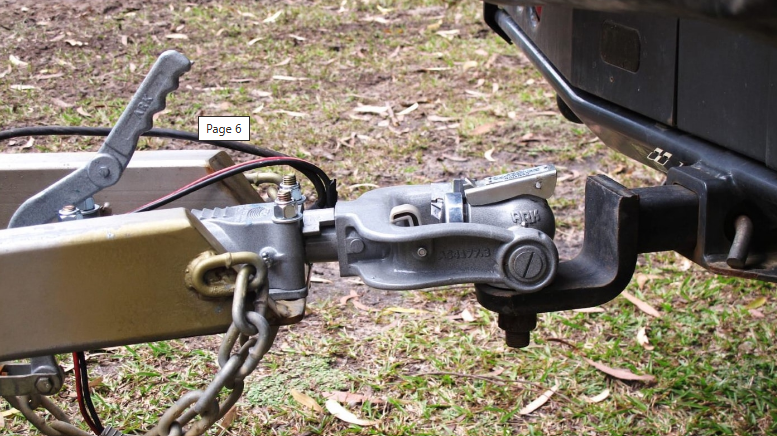
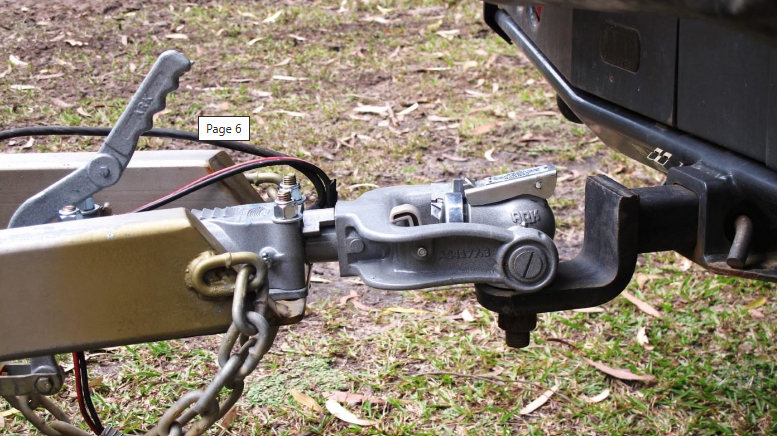
The majority of caravans on Australian roads are connected to the tow vehicle via a 50mm round tow ball and coupling. This is the workhorse of the market. Larger 70mm balls or other hitch types are required for heavier applications.
Based on Australian Design Rules and Standards, tow balls suitable for ATM weights up to 3,500 kg must be 50mm in diameter and stamped on top of the ball as a legal requirement; must be a one-piece element; and must have the manufacturer's name or trademark stamped on the flange. If you are buying a second-hand setup, check these markings before you hitch anything.
The AL-KO Offroad hitch is the most popular hitch found on modern caravans. The hitch has friction pads that help prevent the snaking and pitching of the caravan. In my experience, this is the single most effective upgrade a mid-market caravanner can make for a modest outlay.
Many towing drivers use a weight distribution hitch, particularly when towing large caravans. This device transfers some of the load on the tow bar ball to the towing vehicle's front and rear suspension, maintaining the vehicle's ride height and steering control.
A weight distribution hitch has three key components: a towball mount; spring bars that attach to the ball mount and are tensioned using chain links; and A-frame bracket attachments secured on the A-frame of the caravan.
Is a weight distribution hitch necessary for your setup? If your caravan is lightweight and well-balanced, you may not require one. The best way to determine if you need one is to measure the height of your tow vehicle's front and rear wheel arches while unloaded, then measure the front and rear heights of the caravan when level. After hitching up, re-measure the wheel arch heights. If there's a drop of more than 20mm at the rear, or a noticeable lift at the front, you may need to rebalance your load. If load adjustment alone does not fix the drop, a WDH is your next step.
Pro tip: Never use a weight distribution hitch to compensate for a badly loaded trailer. Sort your packing distribution first, heavy items low and forward over the axle, then use the WDH to fine-tune ride height. Using it as a workaround for a poorly packed van can crack your A-frame or damage the chassis.
Standard ball couplings are fine on sealed roads, but they have a fundamental limitation off-road. The 50mm coupling will have limited roll and once that limit is reached, the caravan can assist rolling over a tow vehicle in a rollover situation. They are therefore not suited to serious off-road towing.
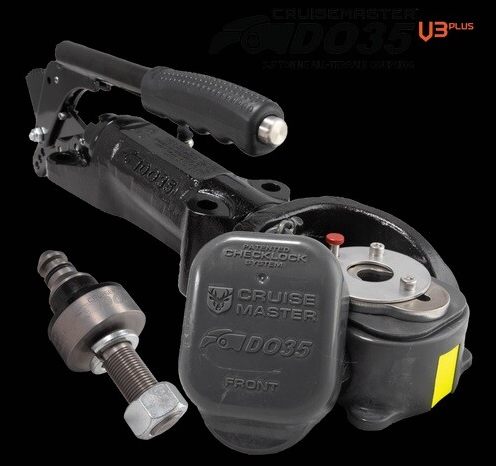
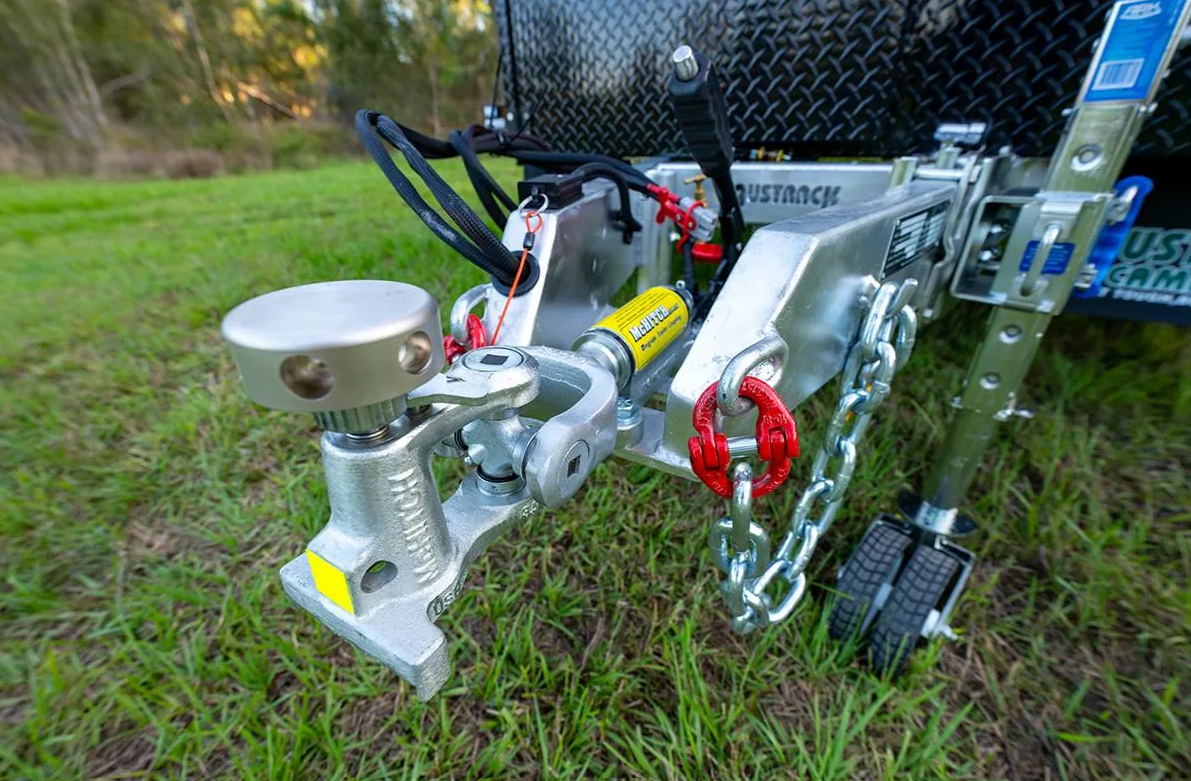
Off-road setups in Australia typically use DO35 or DO45 pin-style couplings, or pintle hooks for extreme terrain. These allow far greater articulation and are built to handle the impacts and flex of corrugated outback tracks. If you browse the towbar tongues and tow ball range at Trailer Camper Australia, you will find ratings up to 4,500 kg and options across Mister Hitches, ARK, and Cruisemaster, all compliant with Australian standards.
In my experience, tow ball weight is the most misunderstood figure in recreational towing. Owners obsess over gross towing capacity while completely ignoring the ball weight calculation that actually governs stability on the road.
In towing, the 10% Rule refers to the ideal tow ball weight, the downward force exerted on your vehicle's tow ball by the hitched caravan. A great deal of research was done in the USA on recommended weights for towing, and the guidelines laid out in SAE International J2807 suggest that your tow ball weight should be approximately 10% of your caravan's total weight, as this helps to maintain stability and reduce the risk of dangerous sway events.
Too little tow ball weight makes the van unstable and prone to sway. Too much overloads the rear of the car. And tow ball weight counts towards your car's GVM, not just its towing capacity. That last point catches many owners by surprise: a fully loaded tow vehicle carrying two adults, camping gear, and a full fuel tank may already be close to its GVM limit before the ball weight of a heavy van is added.
The action this stat demands: Weigh your rig at a public weighbridge with everything loaded the way you actually travel. Tow-Ball Scales are a quick and affordable way to confirm your ball weight is sitting in the safe 8-12% window before every trip.
According to towing expert Richard, 'Anything below 8.5% and there's a chance of sway. When you get up over 11-12% there's a chance of porpoising, so it's the other way.' Sway at highway speed is a terrifying experience and can quickly become unrecoverable. Caravan sway is identified as the major cause of caravan accidents, accounting for 91% of serious incidents. If your ball weight is in range and sway still occurs, check for rear-heavy loading inside the van, items packed behind the axle move weight in the wrong direction.
Pro tip: Use the TowSafe Tow Ball Weight Scales before every trip. Spending two minutes with a scale at the driveway is far cheaper than a roadside incident or a failed roadside weigh-in.
Getting the hitch right is about more than safety; it is a legal obligation. On average, 14 lives are lost and 243 people are hospitalised each year from road crashes involving a light passenger vehicle towing a trailer in Queensland alone, which is why authorities treat non-compliance seriously.
Safety chains are required for trailers up to 2,500 kg (one chain) and between 2,501 kg and 3,500 kg (two chains), meeting Australian standards. Couplings must be suitable for trailers up to 3,500 kg, matching the GTM and complying with Australian standards.
Brake systems are mandatory for trailers with a GTM over 750 kg. For trailers with a GTM between 751 kg and 2,000 kg, brakes are required on at least one axle, while trailers with a GTM over 2,000 kg need brakes on all wheels. These requirements apply across every Australian state and territory, so there is no loophole based on where you live.
The height range required for the towball coupling was, until January 2009, 350-420mm under ADR 62/01. ADR 62/02 came into force in January 2009 and this height has been expanded to 350-460mm. If you are fitting an aftermarket adjustable hitch tongue, such as those in the hitch tongues range at TCA, ensure the drop or rise setting keeps your ball within this legal window when loaded.
I've found that most towing errors fall into a predictable set of categories. Knowing them in advance puts you well ahead of the average first-timer.
Many owners make the mistake of buying a hitch based on their caravan's total weight. This is incorrect. You must match your spring bars to your actual Tow Ball Weight. If you buy a heavy-duty hitch for a light caravan, the bars will be too stiff. This prevents the suspension from working and can lead to cracked A-frames or chassis damage.
Some vehicle manufacturers have specific requirements. Jeep requires a WDH if towing more than 2,200 kg, even with optional air suspension. Kia does not recommend load-levelling devices on vehicles fitted with a genuine Kia accessory towbar. If you are involved in an accident with a WDH attached and your vehicle manufacturer has not approved its use, your insurance company may decline the claim. Always read your owner's manual and confirm compatibility before purchasing any hitch accessory.
The hitch connection is the most critical part of the departure process. It is the handshake between your car and your caravan, and it needs to be firm. Double-check that it is truly locked onto the tow ball. Check that the fixing nuts on fixed tow balls have not come loose, and check the nose weight to ensure it is levelled. Check your safety (breakaway and secondary) cables are correctly attached.
A coupling of some kind is always required to legally connect a caravan to a tow vehicle. What varies is the type. A caravan weight distribution hitch is not something every caravan owner needs, mostly, it is a good option if you are towing a long or heavy caravan. A standard 50mm ball hitch with appropriate safety chains is the minimum legal requirement for most on-road setups under 3,500 kg ATM. Upgrade to a stabiliser or WDH based on your specific weight figures, not as a default.
Ensure the hitch complies with relevant Australian standards, such as AS 4177.1:2004. This certification means the hitch has been tested and meets safety and performance requirements. Look for the AS4177 stamp on the ball itself and compliance markings on the coupling body. If purchasing from a reputable Australian retailer such as Trailer Camper Australia, products will be correctly labelled. If in doubt, contact the manufacturer directly and ask for the compliance certificate.
ATM (Aggregate Trailer Mass) is your loaded caravan's total weight, measured when it is unhitched and standing on its own. GTM (Gross Trailer Mass) is the weight carried on the caravan's axles when it is hitched to the car. The gap between them is the tow ball mass that transfers onto your tow bar, so GTM is always lower than ATM. Your hitch must be rated to at least your ATM; your safety chains and coupling must match the GTM. Use both figures when comparing hitch specifications.
For short trips with lighter utility trailers, a weight distribution hitch may not be necessary. But if your vehicle squats, the steering feels light, or sway increases at speed, adding weight distribution delivers immediate, noticeable improvements in control. As a practical rule, a weight distribution hitch is generally recommended whenever the weight of your trailer exceeds 50% of your vehicle's weight. Even if it does not, consider one if your vehicle appears to be pointing upwards once the trailer is affixed.
Simple hitch accessories such as adjustable ball mounts and tow tongues can generally be fitted by a competent DIYer with the correct torque wrench and the product's fitting instructions. However, the hitch and stabiliser are such critical components in ensuring your caravan remains safe whilst being towed that if you are not fully confident in installing an AL-KO AKS stabiliser you should consider getting the work done at a reputable caravan dealership or service centre. Weight distribution systems in particular require careful measurement and adjustment before the vehicle moves; incorrect setup can be worse than no WDH at all.
The caravan tow hitch review process does not need to be complicated. Start with your actual ball weight, cross-check it against your vehicle's tow ball mass limit, confirm the coupling type your caravan uses, and then match the hitch class to those figures.
If you are setting up a new rig or replacing worn components, Trailer Camper Australia's full hitch extenders, tow balls, and weight distribution range gives you access to trusted brands including Mister Hitches, ARK, Cruisemaster, and AL-KO, all supplied with Australian compliance standards. For caravan coupling accessories and tow ball scales to verify your setup, the Trailer Camper Australia coupling accessories collection is a practical first stop.
Get the hitch right once, check it every single time, and the road ahead looks a great deal safer.
Caravan and Camping Data 2025, Tourism Research Australia. Registration and trip data for Australian caravans and campervans. https://www.tra.gov.au/en/domestic/caravan-and-camping-data
4x4 Australia: Caravan Crashes and Driver Inexperience, 4x4 Australia. Coverage of rising accident rates and ownership growth. https://www.4x4australia.com.au/news/caravan-crashes-caused-by-driver-inexperience
RAC WA: Caravan Collisions Increase, ABC News. Collision statistics and safety advocacy in Western Australia. https://www.abc.net.au/news/2024-10-26/caravan-collisions-increase-driver-error-wa-roads/104507352
Complete Buyers Guide to Caravan Weight Distribution Hitches, Caravan RV Camping. Practical guide to WDH selection and setup. A caravan weight distribution
Ultimate Guide to Caravan Hitches, My Generator. Overview of hitch types, components, and selection criteria. A caravan hitch is a good option
The 50mm Tow Ball, Truck Friendly. Australian compliance standards and tow ball ratings. The vast majority of caravan rigs
Guide to Towing Rules and Regulations in Australia, Elecbrakes. National towing law summary including coupling and brake requirements. https://www.elecbrakes.com/blog/the-ultimate-guide-to-towing-rules-and-regulations-in-australia/
Towing Equipment, Queensland Government, qld.gov.au. Official state guidance on WDHs, safety chains, and coupling rules. https://www.qld.gov.au/transport/vehicle-safety/towing/towing-equipment
Towing a Trailer or Caravan, NSW Government, nsw.gov.au. NSW rules on safety chains, couplings, and loading. https://www.nsw.gov.au/driving-boating-and-transport/roads-safety-and-rules/vehicle-safety-and-compliance/towing-a-caravan
Towing Weights Explained: An Australian Guide 2026, iCheckTPMS. ATM, GTM, tow ball mass explained in plain language. https://www.ichecktpms.com.au/blogs/articles/towing-weights-explained-an-australian-guide-2026
Mastering the 10% Rule, Tuson Australia. Origin and practical application of tow ball weight guidelines. https://www.tusonaustralia.com.au/news-and-events/mastering-the-10-percent-rule-balancing-your-caravan-for-safer-travels-with-tuson
Towing Weights Explained, Carsales, Carsales.com.au. Real-world rig weighing and ball weight calculation with expert commentary. https://www.carsales.com.au/editorial/details/towing-weights-explained-how-to-legally-and-safely-tow-a-caravan-in-australia-150480/
Caravan Weight Distribution Hitch Review, Superior Trailer Parts. Technical review of WDH setup and common buyer mistakes. https://superiortrailerparts.com.au/caravan-weight-distribution-hitch-review-evaluating-the-best-setup-for-safe-towing/
Do I Need a Weight Distribution Hitch?, Without a Hitch. Expert Q&A on vehicle-specific WDH compatibility and insurance implications. https://withoutahitch.com.au/ask-expert-need-weight-distribution-hitch/
Choosing a Towbar for Towing a Caravan, Ultimate Towbars. AL-KO AKS hitch types and tow bar compatibility. https://www.ultimatetowbars.co.uk/choosing-a-towbar-for-your-caravan/
AL-KO Driving Safety Systems, AL-KO Tech. AKS 3004 stabiliser coupling technical specifications. https://www.alko-tech.com/en/Vehicle-types-products/Caravan/Driving-safety
Caravan Towing Regulations, TradeRVs. ADR compliance, towball height, and rating chain explained. https://www.tradervs.com.au/news-reviews/4938-caravan-towing-regulations-do-you-know-them-all
StreetSmarts: Caravans and Towing, Queensland Government. Queensland fatality and hospitalisation statistics for towing incidents. https://streetsmarts.initiatives.qld.gov.au/caravans-and-towing/
Caravan and Light Trailer Towing Parts, Let's Go Caravanning and Camping. Australian standard tow ball requirements and height ranges. https://towing.letsgocaravanandcamping.com.au/towing-parts/
Towbar Tongues and Tow Balls, Trailer Camper Australia. Full range of compliant hitch tongues, balls, and accessories. https://trailercamperaustralia.com.au/collections/hitches-tow-balls
These are placeholder FAQs -- replace via the "custom.article_faqs" metafield.