0 item(s)
View cart
You have no items in your shopping cart.
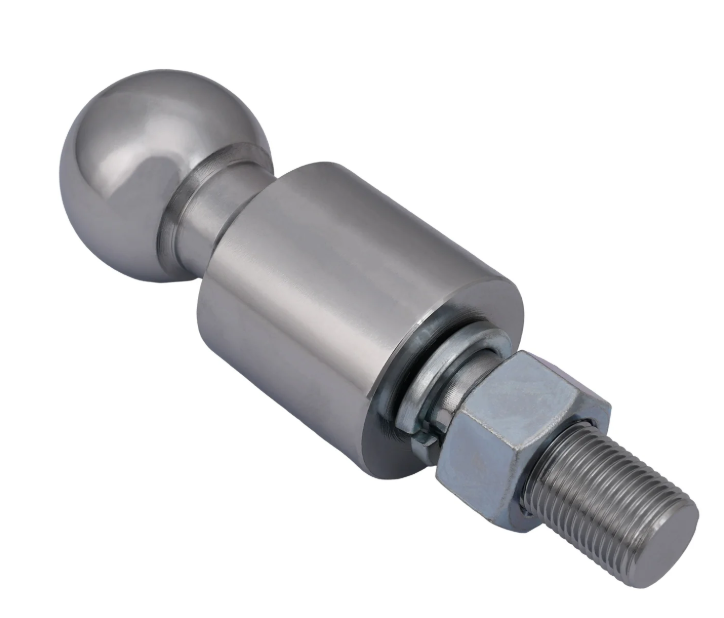
If you tow a caravan or trailer in Australia, the small steel ball bolted to your towbar is doing more work than most people realise. Get the height wrong and you end up with a rig that pitches nose-down on the road, strains your vehicle's rear axle, and corners unpredictably. A hi-rise tow ball is one of the simplest fixes available, yet it remains one of the most overlooked pieces of towing equipment.
According to the Australian Design Rules, tow ball height should be anywhere between 350 mm and 460 mm from the ground. When a standard tow ball leaves you below that window, or when your trailer coupling sits noticeably higher, the answer is usually a hi-rise tow ball rather than a costly towbar replacement. Knowing when and how to use one could be the difference between a safe, level tow and a dangerous pitch angle on every trip.
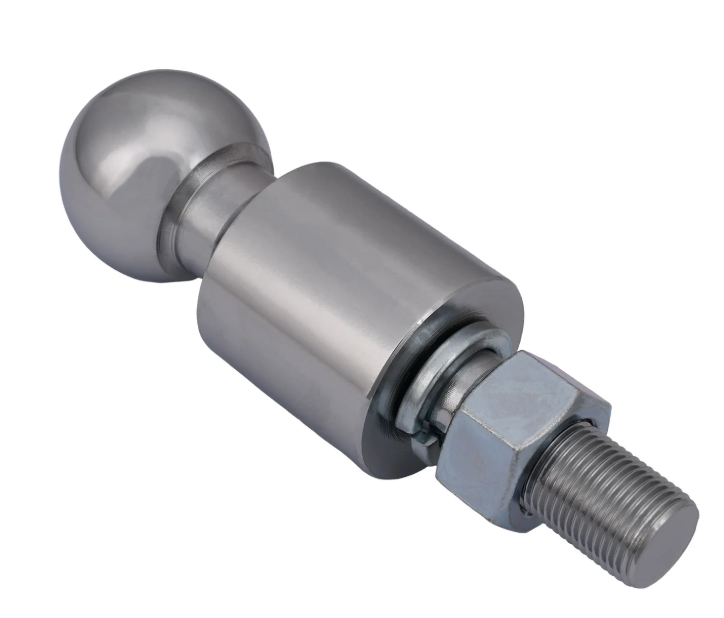
Height is a safety issue, not just a comfort one: Too much or too little weight on the tow ball can result in poor handling, swaying, or even a loss of control while driving. A hi-rise tow ball corrects coupling height so your rig tows level, reducing those risks directly.
The lift is significant but measured: A hi-rise tow ball sits approximately 25 mm higher than standard tow balls, which is enough to correct most height mismatches without altering your towbar itself.
European friction couplings need one: The hi-rise tow ball is approximately 24-25 mm higher than a standard tow ball, which is beneficial when using European-style friction head trailer couplings like AL-KO AKS, which may require the extra height. If your caravan has an AL-KO AKS stabiliser, a hi-rise ball is not optional; it is required.
Always check your stamped rating: Each towing ball is stamped with a load rating and torque specification, never exceed these limits. Some hi-rise variants carry a lower maximum capacity than standard balls, so verify before you buy.
| Situation | Solution | Effort Level | Time to Results |
|---|---|---|---|
| Trailer coupling sits higher than tow ball | Hi-rise tow ball (25 mm lift) | Low | Immediate |
| AL-KO AKS friction coupling fitted to van | Hi-rise ball + anti-rotation retention plate | Low | Immediate |
| Lifted 4WD with caravan sitting nose-down | Hi-rise ball or adjustable tongue | Low-Medium | Same day |
| Severe height mismatch (over 50 mm) | Adjustable towbar tongue | Medium | 1-2 days |
| Standard tow ball height is correct | Standard 50 mm tow ball | Low | N/A |
Start here if you are:
A new caravan owner: Measure your coupling height before assuming your standard tow ball is fine, a hi-rise ball is a cheap first fix.
Driving a lifted 4WD: A hi-rise tow ball is designed for vehicles requiring additional coupling height, including lifted 4WD applications. Check whether your coupling is sitting lower than the trailer A-frame before your first trip.
Using a European-branded caravan: If your van came with an AL-KO AKS stabiliser coupling, purchase a hi-rise ball and a retention plate as a matched set before you hitch up.
A tow ball is a hardened steel spherical attachment, precision-machined to match a corresponding trailer coupling, and bolts vertically through the towbar tongue, secured underneath with a high-strength nut. A hi-rise variant follows exactly the same design, with one key difference: the shank is longer, pushing the ball itself higher above the mounting plate.
A high-rise shank provides extra clearance between the tow ball and the vehicle, making it ideal for trailers with higher coupling points. In practical terms, this means that when your towbar sits low relative to the trailer's A-frame, a hi-rise ball can close that gap without any structural modification to your vehicle.
Hi-rise tow balls are available in several lift heights. A hi-rise tow ball sits approximately 24 mm to 25 mm higher than a standard tow ball, with the increased height ensuring that friction head couplings have adequate clearance from the trailer ball mount. Larger lifts, up to 2 inches (approximately 50 mm), are available for more severe mismatches, though these carry reduced load ratings. For most everyday Australian caravanning setups, the 25 mm lift handles the job comfortably.
Pro Tip: Before buying, park your tow vehicle on level ground, measure the height of your tow ball centre from the ground, then measure the height of your empty trailer coupling head. If the difference exceeds 25 mm, look at an adjustable tongue rather than relying solely on a hi-rise ball.
It is recommended that the caravan be towed as level as practical, or with the hitch approximately 50 mm below level, to help maintain a relatively level caravan and tow vehicle under heavy braking, which also helps maintain maximum suspension travel on both vehicles. A nose-down trailer angle shifts weight forwards onto the tow vehicle's rear axle, which stresses the chassis and reduces braking efficiency. A nose-high angle can lift the rear wheels of the tow vehicle, reducing steering control.
If the tow hitch is higher than the level position, the caravan will tend to lift the rear of the tow vehicle off the ground under heavy braking, transferring weight from the rear onto the front axle, reducing braking efficiency and placing a heavy load on the front suspension. Getting the hitch angle right, therefore, pays dividends in braking distances and tyre wear over the life of your setup.
The recommended tow ball weight in Australia is about 10% of your aggregate trailer mass, or a maximum of 350 kilograms, whichever is lowest. That download figure depends partly on whether your rig is towing level. If the trailer sits nose-down, more weight transfers to the ball than the manufacturer intended. A tow ball is a hardened steel known as tow ball download, is essential for stable towing; insufficient download can cause sway, while excessive weight can overload the rear axle. A properly selected hi-rise ball addresses the geometry that drives those numbers.
The Transport NSW caravan safety guide recommends that before every trip, drivers identify their tow ball weight alongside ATM, GTM, and GCM figures, making the physical height of your setup a legal and safety consideration, not just a comfort one.
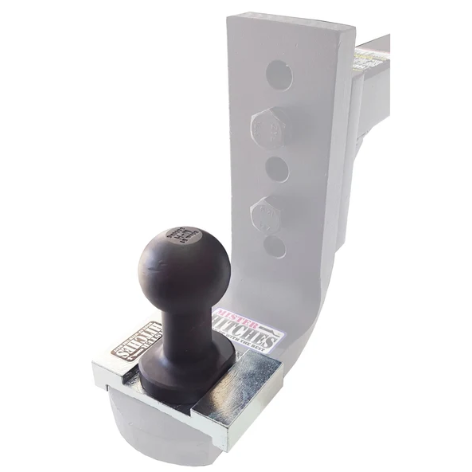
Many popular Australian-sold caravans come fitted with AL-KO AKS stabiliser coupling heads, a European design that clamps onto the ball using friction to dampen sway. This design creates a specific problem. Most tow vehicles in Australia and New Zealand use a conventional tow ball that is fixed through the towbar tongue and retained by a washer and nut, and this type of tow ball, when used with an AKS-style coupling head, can become loosened by normal vehicle and caravan rotation during turning.
To eliminate this risk, AL-KO developed, using an Australian Standard 50mm tow ball with flats on the ball flange, a retention plate that stops rotation of the tow ball during operation.
A hi-rise tow ball designed for AL-KO AKS friction couplings is compatible specifically with the AKS2003 and AKS3004 models, and its design ensures a secure connection. The retention plate locks onto the flat-sided base of the ball and bolts to the towbar tongue, preventing the ball from spinning as the friction coupling grips it in corners. The retention plate combats tow ball rotation when coupled up, which stops the tow ball nut from loosening when cornering.
If your caravan has an AKS coupling and you purchase a hi-rise ball without the retention plate, the AKS stabiliser will gradually loosen the ball nut. Always buy the kit. Retailers such as Trailer Spares Direct stock the full hi-rise ball and retention plate package specifically for this combination.
Pro Tip: When fitting a hi-rise ball with a retention plate for an AKS coupling, use a torque wrench to tighten the nut to the specification stamped on the ball. Over-tightening can strip the thread; under-tightening is dangerous. Check torque before every long trip.
A standard 50 mm tow ball is normally rated to 3,500 kg, but that capacity can drop with a hi-rise design. A 25 mm hi-rise ball can retain the full 3,500 kg rating when it meets Australian Standard AS/NZS 4177.2. The Mister Hitches Hi-Rise Black Oxide 50 mm tow ball, for example, is rated to 3,500 kg and meets Australian Standard AS4177.2, sitting approximately 1 inch (25 mm) higher than a standard 50 mm tow ball.
Larger hi-rise options, particularly import-grade 2-inch (50 mm) lift balls, are often rated to only 2,000 kg. That matters enormously if your laden caravan weighs more than that. Always match your ball's stamped rating to your caravan's ATM and the tow ball download, not just the trailer's tare weight.
Australian conditions are hard on steel. Chrome-plated finish suits damp coastal environments. Black oxide coating, used on many AL-KO-compatible hi-rise balls, has good corrosion resistance and a flat black finish that reduces reflective glare from other motorists' headlights. Either finish is acceptable; what matters is that you inspect the ball for pitting or cracking before each season.
At Trailer Camper Australia (TCA), the towing accessories section covers the key considerations for matching balls, couplings, and towbars for Australian trailer and camper setups, worth a look if you are building or upgrading a tow rig from scratch.
A hi-rise ball raises the connection point. Sometimes your tow ball is already sitting too high relative to a low trailer coupling. In that case, the answer is a drop plate or a lowered tongue, not a hi-rise ball. The height of the towbar directly affects the vehicle's towing capacity, and according to the Australian Design Rules, the tow ball height should be anywhere between 350 mm and 460 mm from the ground. Measure first, then select the right product.
Each towing ball is stamped with a load rating and torque specification, never exceed these limits. Many owners tighten a tow ball by feel. The torque specification exists because under-torqued balls can back off under load, especially with AKS-type couplings applying lateral friction continuously. Use a torque wrench.
A quality hi-rise ball should be compliant with both AS 4177.2 and ADR 62/02, the Australian standard and Australian Design Rule governing mechanical connections between vehicles. Balls that carry neither certification should be avoided regardless of price. The Western Australia Department of Transport Safe Towing Guide makes clear that all towing equipment must be in a roadworthy and safe condition, non-certified hardware puts you outside those requirements.
Pro Tip: Photograph the stamped specifications on your tow ball when you first fit it. Store the image on your phone. If you are ever stopped at a weigh station and asked to verify your tow ball rating, you have immediate proof without needing to remove the ball.
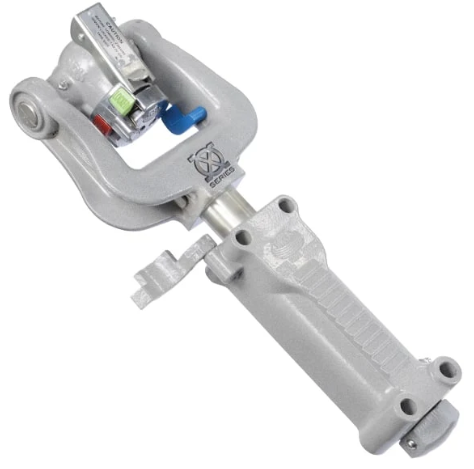
Some offroad couplings such as this ark model require a hi-rise towball to allow for full offroad articulation.
A hi-rise tow ball sits approximately 25 mm higher than a standard tow ball, achieved by using a longer shank between the mounting flange and the ball itself. The coupling socket on your trailer still attaches to the same 50 mm ball diameter, the only difference is that the ball centre sits higher above the towbar tongue, which corrects the angle of your trailer A-frame when your towbar mount sits lower than the trailer coupling.
A quality 25 mm hi-rise ball that meets AS/NZS 4177.2 typically retains a full 3,500 kg rating. However, larger lift options, particularly budget 2-inch hi-rise balls, are often stamped at only 2,000 kg. Many hi-rise tow balls are rated 3,500 kg, but that rating can drop with a hi-rise design. Always check the stamped rating on the ball itself and confirm it exceeds your caravan's ATM before purchase.
Park your tow vehicle loaded as it would be for a trip.
Tow Ball Height, How High Is Correct?, Advanced Towbars. Australian Design Rule requirements for tow ball height and guidance on correcting height mismatches. https://www.advancedtowbars.com.au/towbar-height-how-high-is-correct/
Hi-Rise Tow Ball and Retention Locking Plate Kit, The 4WD Shed / Mister Hitches. Product specifications for a 25 mm hi-rise 50 mm tow ball rated to 3,500 kg and compliant with AS4177.2. A hi-rise tow ball sits
50mm High Shoulder Tow Ball, 3500kg ATM, Couplemate Truck, Trailer and Caravan Parts. Details on high shoulder design, articulation clearance, and compliance with AS 4177.2 and ADR 62/02. Mister Hitches Hi Rise Tow Ball 50mm
Mister Hitches Hi Rise Tow Ball 50mm, Suit AL-KO AKS Euro Coupling 3500kg, CARAC. Compatibility details for AL-KO AKS2003 and AKS3004 friction couplings and retention plate pairing. https://carac.com.au/products/mister-hitches-tow-ball-50mm-hi-rise-to-suit-alko-aks-euro-coupling-3500kg-black
These are placeholder FAQs -- replace via the "custom.article_faqs" metafield.