0 item(s)
View cart
You have no items in your shopping cart.
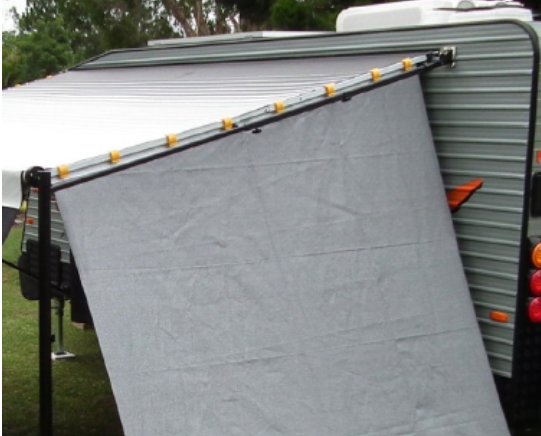
The sound starts around midnight. The wind picks up, the caravan rocks gently, and then, there it is, the relentless, rhythmic slapping of awning fabric that turns a peaceful camp into a sleepless ordeal. Every seasoned caravanner knows this frustration: you're enjoying a peaceful evening outdoors when the wind picks up and your awning starts flapping like a ship's sail. It ruins your rest and can damage your awning fabric.
The good news is there's a simple, affordable solution that has become standard equipment for experienced travellers across the country: the anti-flap kit (AFK). Australians took 17.3 million caravan and camping trips in 2025, a 14% increase, with nearly 938,000 caravans and campervans registered nationwide. With more rigs on the road than ever, understanding how to protect your awning investment has never been more important. According to 6Wresearch, the Australian caravan market is expected to grow at a CAGR of 7% through 2031, meaning awning accessories like anti-flap kits are set to become even more mainstream.
Awning damage is expensive to ignore: Australian caravan owners can expect to spend between $300 and $1,000 for awning fabric replacement. An anti-flap kit costing a fraction of that figure prevents the premature wear that leads to those bills, so fit one before you need a replacement.
Wind above 40 km/h is a genuine threat: Most caravan awnings should be retracted in winds over 40 km/h, and keeping an awning fully extended in strong gusts is one of the fastest ways to tear fabric, twist frames, or cause expensive damage. An anti-flap kit extends your safe operating window in moderate breezes.
Anti-flap kits and de-flappers are different products: There are two popular solutions to fix flappy awnings, de-flappers and anti-flappers, and while they sound similar, many vanners use the terms interchangeably when they are in fact very different products. Choosing the right one matters.
Sizing must be measured, not guessed: Many people select the wrong size anti-flap kit because they measure the wrong part of their awning, or measure when the awning is incorrectly set up. Always measure the projection with the roller at the 3 o'clock position.
| Situation | Best Solution | Effort Level | Time to Set Up |
|---|---|---|---|
| Occasional breezes, tight budget | De-flappers (strap type) | Low | Minutes |
| Regular camping, moderate wind | Standard anti-flap kit | Medium | 30-60 min install |
| Coastal or exposed sites | Anti-flap kit + curved rafters | Medium | 60-90 min install |
| Full annex or privacy walls needed | Anti-flap kit (sail track model) | Medium | 60-90 min install |
| Very high winds (above 40 km/h) | Retract the awning entirely | None | Immediate |
Start here if you're:
A weekend camper in sheltered spots: Begin with de-flappers; they clip on in minutes and provide a good entry point.
A regular or full-time traveller: Invest in a proper aluminium anti-flap kit. The one-time install pays off every single trip.
Planning to add annexe walls or privacy screens: You need an anti-flap kit with an integrated sail track, de-flappers alone will not support walls.
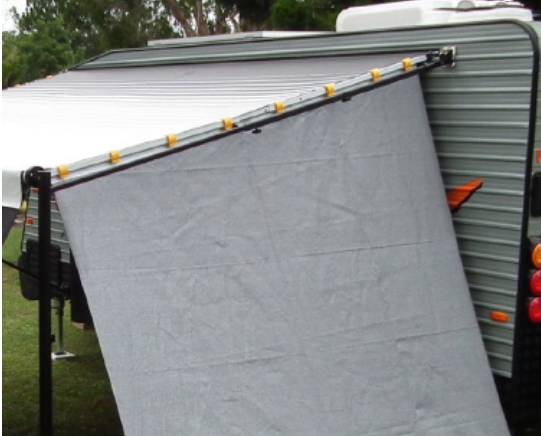
Anti-flap kits are side bars that fit between the caravan wall and the outer edge of the awning fabric. They work by adding tension along the length of the awning fabric, rather than relying solely on the awning arms for support.
An anti-flap kit consists, in its most basic form, of two aluminium bars that run the full depth of your awning when it is rolled out, from the van to the roller. These bars have a large clamp that grabs the entire awning, which prevents the awning vinyl from being able to flap about. The result is a rigid, taut roof over your outdoor space that holds firm in moderate wind conditions.
De-flappers are a cheap and easy DIY way to reduce awning flapping. They are quick to fit and give a bit more tension on the vinyl, using a plastic clamp about 150 mm long that clamps onto the vinyl of your awning, then you tighten the velcro straps up to the awning rafter.
A full anti-flap kit is a different proposition. An anti-flap kit is a simple but effective device that clamps onto the outer edge of your awning fabric to stabilise it, prevents the flapping noise and movement caused by wind, and creates a more rigid awning structure, reducing wear and tear, minimising the risk of rips or sagging, and helping water run off more effectively in rainy conditions.
Pro Tip: If you ever plan to attach annexe walls or privacy screens to your awning setup, a proper anti-flap kit with a built-in sail track is the one to buy. The inbuilt tracks of the anti-flap kit provide a means of connection for erecting privacy walls, sunscreens, and fly netting. Once a wall is added, the anti-flap kit creates a wind and waterproof seal between the edge of the awning fabric and the wall.
Constant flapping puts stress on your awning fabric, leading to premature wear and potential tears. Anti-flap kits protect your investment by keeping the fabric taut and secure.
An anti-flap kit can actually lengthen your awning's life by preventing it from overstretching when it is flapping in the breeze. Given that Aussie Traveller's caravan awning replacement cost guide puts fabric replacement at $300 to $1,000, spending $100 to $200 on an anti-flap kit is straightforward protection of a much larger investment.
Insurance adjusters know that RV awnings are rated for low wind load. If you choose to ignore that fact, they may not accept responsibility for damage. Fitting an anti-flap kit and pairing it with tie-down gear demonstrates proactive care, which strengthens your position if you ever need to make a claim. If your caravan awning was damaged in a storm or strong winds, replacement is often covered by your insurance company, but only if you can show the awning was properly secured.
This is where most buyers go wrong. The correct anti-flap kit size is determined by your awning's projection, how far it extends from your vehicle.
For a roll-out awning, wind it out until the sail track on your roller is at the 3 o'clock position, this avoids a gutter effect where water can pool. Then measure from the wall of the van to the inside barrel of the awning. Most standard kits come in three sizes, typically covering projections from around 2,100 mm to 2,400 mm.
According to the Many people select the wrong size, measure from the wall of the vehicle to the roller tube with the awning correctly set up, never measure a fully over-extended awning, as this distorts the measurement.
De-flappers are a cheap and easy people have unknowingly damaged the internal mechanisms of the awning roller during DIY installs of anti-flap kits. There are three or more sizes of kits to suit different awnings, ensure you get the right one.
Pro Tip: Daily use of an anti-flap kit is very quick and easy; it just clamps onto the fabric. The initial installation, which involves affixing wall brackets and drilling a small hole into the roller tube, is a popular DIY project but requires careful measurement and drilling. Measure twice and drill once.
Over-tightening can increase stress on awning arms and mounts, while too little tension reduces effectiveness. Correct adjustment matters more than maximum tension.
This is a critical error that causes serious damage. You must always remove the AFK before retracting (rolling up) your awning. The rigid aluminium clamps will severely damage the fabric and the roller tube if you attempt to roll them up with the awning.
An anti-flap kit is not a substitute for good wind awareness. Do not wait until conditions become severe. Retracting an awning in already strong winds is both difficult and dangerous. Check the forecast each evening and retract overnight if gusts are predicted.
Pro Tip: Setup quality, tensioning pegging, and guying, makes a huge difference. Even the best awning becomes unstable if it is loose or uneven. Pair your anti-flap kit with heavy-duty pegs and guy ropes for complete peace of mind.
Australians have solid options for sourcing a quality kit. The team at Trailer Camper Australia (TCA) stocks a range of Australian-made anti-flap kits, including custom-fitted options from the Grasshopper Halley range designed to suit specific camper trailer models. Proudly Australian made, TCA's range covers custom fitted shades, anti-flap kits, optional add-ons, and roof rafters for a variety of camper trailer brands.
Aussie Traveller's Anti-Flap Kit range is widely regarded as the original aftermarket AFK on the Australian market, preventing wind flap and providing a waterproof method to attach walls to your awning, designed to suit most brands of roll-out awnings and walls. The Dometic Anti-Flap Kit (AFK) Standard is another well-regarded option, with a lightweight but sturdy design that is suitable for all roll-out caravan awnings and comes in black or white to match your setup.
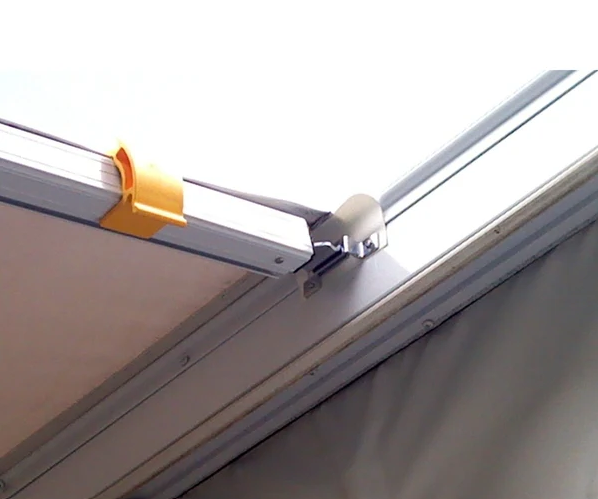
An anti-flap kit is designed to enhance the stability and durability of caravan awnings by preventing the flapping of awning fabric in windy conditions, thereby reducing noise and potential damage. It clamps along the outer edge of the awning fabric using aluminium bars, creating a rigid structure that resists wind movement and also provides an integrated sail track for attaching walls and accessories.
The one-time initial installation, attaching brackets to the caravan and drilling a small hole in the roller tube, typically takes 30 to 90 minutes depending on your experience and awning type. Installing an anti-flap kit is easy once the brackets are in place. After that initial setup, clipping the kit on and off at camp takes just a few minutes each time. The key is taking care during that first install to get the sizing and drilling position exactly right.
Yes. The rigidity and strength of the AFK's sail track are specifically designed to handle the weight and tension of a full canvas annexe wall, making them ideal for creating secure, weather-resistant annexes. If adding walls is part of your plans, choose a kit with a built-in sail track from the outset rather than upgrading later.
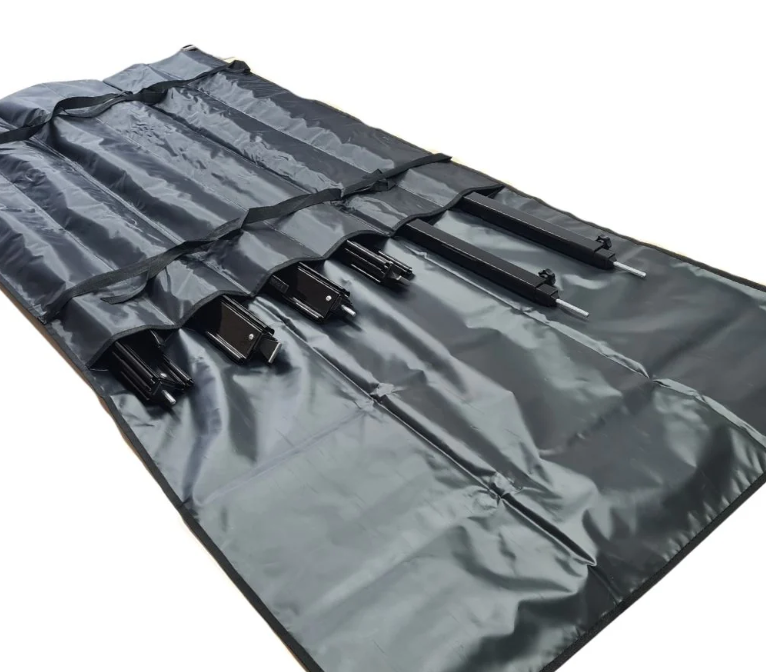
Absolutely. The kit must be removed and stored before you roll up your awning and hit the road. De-flappers are a cheap and easy you will use it every time you set up your awning; it improves your comfort level so much, and they are quick to set up. Many kits come with a dedicated carry bag to keep everything together during transit.
A flapping awning is more than an annoyance; it is an early warning sign of fabric stress that, left unchecked, leads to expensive repairs. An anti-flap kit is one of the most cost-effective accessories in any caravanner's kit, protecting a $300 to $1,000 fabric investment for a fraction of the cost and delivering quieter, more comfortable nights at camp. With Australians taking a record 17.3 million caravan and camping trips in 2025, more people than ever are discovering that the right gear makes all the difference between a stressful trip and a brilliant one.
If you're ready to kit out your camper with the right accessories, explore the Australian-made range at Trailer Camper Australia and stop letting the wind dictate your sleep.
These are placeholder FAQs -- replace via the "custom.article_faqs" metafield.